Folding Walker Exporter & Exporters serving the Nagoya Market
Strategic B2B Procurement, JIS T 9251 Compliance Standards & Architectural Ergonomics for Aichi Prefecture's Healthcare & Senior Care Supply Chains
Precision-Engineered Portfolio
Institutional-Grade Mobility & Assisted Walking Systems
High-performance motorized rollators, foldable power wheelchairs, and lightweight physical therapy walkers certified for global export and Japanese home care standards.
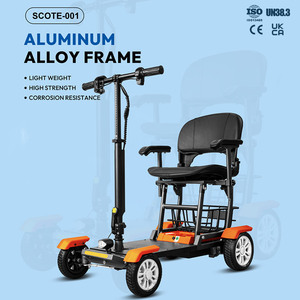
Ultra-Light Frame
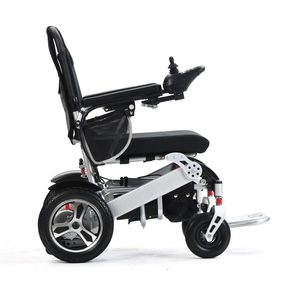
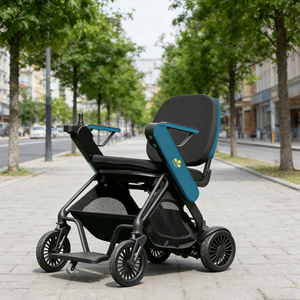
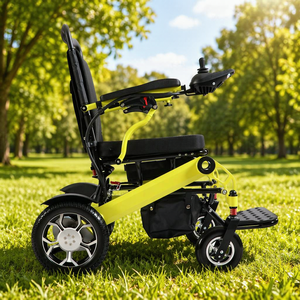
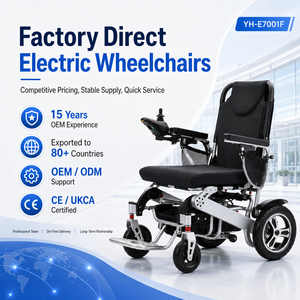
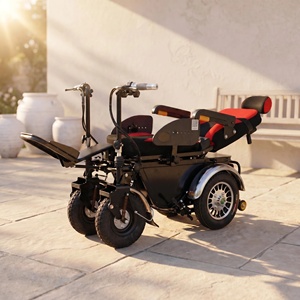
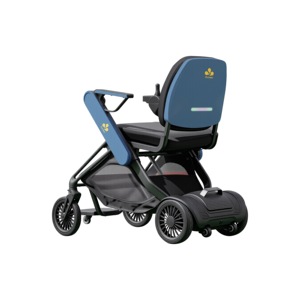
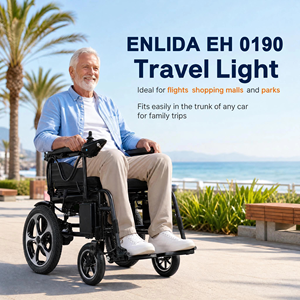
Lightweight Disability Mobility Scooter Electric Wheelchair Powered Mobility Handicapped Scooters
1. Executive Summary & Nagoya Mobility Market Dynamics
As Japan experiences unprecedented demographic shifting toward a super-aged society, the Chubu economic region—anchored by Nagoya City in Aichi Prefecture—presents a highly specialized, rigorous procurement landscape for assistive rehabilitation hardware. Overseas medical device buyers, institutional equipment distributors, and care facility procurement directors seeking a reliable folding walker exporter serving the Nagoya market must navigate a complex convergence of strict national engineering benchmarks (JIS standards), municipal healthcare regulations, and unique urban architectural realities.
Nagoya’s urban infrastructure blends high-density commercial centers such as Sakae, Meieki (Nagoya Station district), and Kanayama with suburban residential topography characterized by narrow, multi-level traditional dwellings (Genkan step entryways) and compact public transit corridors (Meitetsu and Subway networks). Consequently, mobility aids cannot merely function as basic structural supports; they must represent sophisticated engineering compromises between extreme frame lightness, structural yield strength under lateral loads, dynamic anti-tipping safety, and rapid single-touch foldability.
Information Gain Insight: Unlike Western markets where walking frame selection heavily prioritizes high maximum weight capacities (>150kg) and wide stability footprints (>70cm), the Nagoya municipal procurement standard prioritizes ultra-compact turning radii (<75cm), delicate floor-pressure distribution (protecting traditional Tatami matting and flooring timber), and seamless integration with Japan's Long-Term Care Insurance (Kaigo Hoken) rental system.
Demographic Acceleration & Municipal Healthcare Demands
According to data from the Aichi Prefectural Government and Nagoya City Municipal Statistics, the proportion of residents aged 65 and older has surpassed 28.6%, creating sustained structural demand for specialized geriatric rehabilitation technology. Healthcare facilities across Nagoya—ranging from large institutional medical complexes like Nagoya University Hospital and Nagoya City University Hospital to specialized long-term care homes (Tokuyo and Shoto facilities)—require high-volume access to folding walkers and motorized rollators that meet strict infection-control cleanability standards while maintaining low long-term maintenance costs.
Urban Doorway Clearance
Residential inner door frames in historic Nagoya neighborhoods often measure between 60cm and 65cm. Standard export walkers fail without compact frame engineering.
Kaigo Hoken Rental Readiness
Japanese healthcare distributors require supplier equipment to possess modular replacement parts and rapid disassembly mechanisms for hygienic re-sterilization.
Transit & Platform Safety
Walker wheel casters must incorporate dual-locking mechanisms to prevent unintended rolling on Nagoya underground subway platform inclines.
2. Structural Engineering & Technical Compliance Standards for Japan
To successfully export mobility devices into Aichi Prefecture, manufacturers cannot simply offer standardized international stock. Product lines must be optimized against the Japanese Industrial Standard (specifically JIS T 9251 for Walking Aids and JIS T 9201 for Manual/Powered Mobility Devices). Anrace’s engineering team designs customized aluminum alloy structures, precision joints, and ergonomic handgrip contours specifically aligned with these technical expectations.
Technical Benchmark Parameter
Standard Global Export Spec
Nagoya / Japan Optimized Standard (Anrace Spec)
Clinical & Structural Benefit
Overall Chassis Width
680 mm – 740 mm
540 mm – 610 mm
Passes smoothly through residential Genkan steps & narrow apartment doorways.
Primary Frame Material
Standard Q235 Steel / Basic Aluminum
Heat-Treated 6061-T6 Aircraft Grade Aluminum
Reduces total walker mass below 4.5kg while retaining 120kg dynamic payload capacity.
Folded Lateral Depth
280 mm – 350 mm
180 mm – 220 mm
Enables upright self-standing storage inside micro-closets or compact car trunks (K-cars).
Absorbs micro-vibrations on uneven cobblestone sidewalks while preventing floor discoloration.
Braking & Locking Actuation
Single-Stage Cable Brake
Dual-Stage Ergonomic Loop Brake with SG-Level Park Lock
Requires <15N of grip force to activate, accommodating arthritic senior patients.
Material Metallurgy & Weight-to-Strength Optimization
The primary failure point of low-tier walker exports entering Japanese coastal cities like Nagoya (where humidity and maritime air accelerate oxidation) lies in joint corrosion and metal fatigue. Anrace utilizes double-anodized 6061-T6 aluminum tubing combined with robotic TIG welding. Frame joints are subjected to over 100,000 cycles of dynamic fatigue testing under an off-center load of 800N, ensuring zero structural deformation during prolonged daily use on sloping suburban terrain such as Motoyama and Yagoto.
3. Localized Application Scenarios Across Aichi Prefecture
Effective mobility aids must seamlessly fit into the daily lives and environments of users in Nagoya. By analyzing real-world usage patterns, our product architecture addresses three specific localized environmental conditions:
Scenario A: Multi-Modal Transit Commuting
Nagoya’s commuters rely heavily on subway lines (Higashiyama, Meijo) and suburban rail networks (Meitetsu, JR Central). Walkers equipped with Anrace’s one-hand quick-fold mechanism enable elderly commuters to fold their frame within 2 seconds upon boarding trains, avoiding aisle obstruction and ensuring public safety.
Scenario B: Traditional Residential Genkan & Bath Entry
Japanese residential layouts feature raised steps (Genkan) at front entrances and tight sliding-door access to washrooms. Compact 2-in-1 folding walker-commode hybrids allow smooth navigation across tight interior thresholds without scraping walls or damaging delicate sliding door tracks (Fusuma/Shoji frames).
In rehabilitation wards across Aichi Prefecture, physical therapists require height-adjustable fore-arm support walkers with directional caster locks. This enables stroke recovery patients to practice gait training safely without risk of lateral deviation or sudden frame collapse.
Clinical Ergonomics Note: Japanese end-users typically have lower average stature indices compared to North American or European demographics. Standard height-adjustment ranges (85cm–100cm) often cause shoulder elevation strain in Japanese seniors. Anrace export models feature micro-adjustable height settings starting from 72cm up to 88cm, ensuring anatomically correct 20-to-30 degree elbow flexion during gait assist.
4. Supply Chain Logistics: Ocean Freight to Port of Nagoya & Warehouse Fulfillment
As one of Japan's busiest maritime gateways, the Port of Nagoya handles the vast majority of industrial and medical imports destined for central Japan. Overseeing foreign trade operations requires streamlined customs clearance, precise harmonization code (HS Code) classifications, and optimized ocean container stuffing to minimize landed cost per unit.
For institutional distributors importing from Anrace’s manufacturing facilities, our logistical infrastructure ensures efficient container packing. High-density knock-down (KD) packaging allows up to 1,400 units of folding walkers per 40-foot High Cube (40HQ) container. Each unit is wrapped in anti-moisture VCI film and heavy-duty 5-ply corrugated export cartons, protecting polished metal finishes against sea fog degradation during transit across the East China Sea.
Importing mobility products into Japan requires strict compliance with Japan’s Pharmaceuticals and Medical Devices Act (PMD Act / Yakki-ho) when marketed as medical class devices, or SG (Safety Goods) Certification for general welfare equipment. Anrace works hand-in-hand with Japanese importers to supply comprehensive Technical Construction Files (TCF), factory audit reports, ISO 13485 certification records, and material safety data sheets (MSDS) for lithium-battery-assisted motorized models.
Planning a Bulk Order for the Nagoya & Chubu Market?
Request an OEM manufacturing quote, JIS compliance data package, or custom sample shipment today.
5. Why Anrace is the Preferred Manufacturing Partner for Exporters & Importers
Anrace Assistive Mobility is a dedicated manufacturer of professional-grade power wheelchairs, manual wheelchairs, walking aids, bedside commodes, reclining back supports, and orthopedic cushions. Operating from our state-of-the-art ISO-certified production facilities in Rohtak (Haryana) and supported by executive sales centers in New Delhi, India, Anrace exports high-reliability mobility hardware to over 30 countries worldwide.
ISO 13485 & CE Quality Assurance
Our production pipelines adhere to international medical device quality systems. Every walker batch undergoes dynamic impact testing, brake wear trials, and weld integrity inspection.
Complete OEM & ODM Customization
We provide tailored frame dimensions, Japanese-language instruction manuals, private-label branding, customized powder-coating colors, and specialized accessories for local distributors.
Scalable B2B Supply Capacity
With monthly output capacity exceeding 25,000 units across our walking aids lines, we ensure stable lead times, protecting Nagoya buyers from regional supply chain shocks.
By partnering directly with an established primary exporter, healthcare distributors in Nagoya eliminate unnecessary intermediary markups, gain direct control over technical specifications, and receive responsive engineering support for localized market adaptations.
6. Nagoya Importer & Distributor FAQ (Frequently Asked Questions)
Below are answers to critical technical, regulatory, and commercial inquiries commonly raised by Japanese medical equipment importers, welfare equipment rental operators, and regional distributors serving Aichi Prefecture.
What specific certifications are required to import folding walkers through the Port of Nagoya?
While basic mobility walkers fall under general consumer welfare equipment in Japan, institutional sales and Kaigo Hoken insurance rental programs require compliance with JIS T 9251 standards. Products seeking the voluntary SG (Safety Goods) Mark must pass physical load, tip-over angle, and latch locking test protocols certified by the Consumer Product Safety Association (CPSA) of Japan. Anrace provides complete factory test documentation to facilitate local SG submission.
How do Anrace walkers accommodate Nagoya’s narrow housing architecture?
Our Nagoya-series export walkers are engineered with a reduced exterior width footprint (54cm to 58cm) compared to standard Western models (68cm+). Additionally, our 3D single-touch folding mechanism reduces the frame's width to under 20cm, allowing the walker to stand upright inside small apartment foyers (Genkan) without relying on wall support.
Can Anrace support custom Japanese-language packaging and private labeling?
Yes. We offer full OEM services including Japanese Kanji/Kana product labeling, customized JAN barcode printing, branded outer cartons, and Japanese user operation manuals compliant with local consumer disclosure laws.
What is the typical ocean freight transit time from your factory to Nagoya Port?
Following production completion, ocean shipping from Indian export ports to the Port of Nagoya typically takes between 22 and 28 days depending on direct or transshipment vessel schedules. Total door-to-port fulfillment cycle, including manufacturing, averages 35 to 45 days.
Are spare parts and replacement caster wheels readily available for maintenance?
Absolutely. To support long-term rental fleets under Japan's welfare equipment leasing model, Anrace supplies standardized spare parts packages—including TPR caster assemblies, rubber tips, brake cables, and push-button detent pins—packaged for rapid maintenance swaps.
How does Anrace ensure frame durability against Japanese coastal humidity?
All aluminum walker frames undergo a multi-stage chemical wash followed by anodic oxidation (anodizing) or electrostatically applied epoxy powder coating. Steel hardware components are grade 304 stainless steel or treated with anti-corrosion zinc plating, preventing rust formation in humid coastal environments.
Connect with Our Export Engineering Team
Direct B2B supply, OEM technical drawings, and factory direct pricing for exporters & Nagoya distributors.