
Featured Product Lineup
High-Performance Mobility & Seating Products
Engineered for maximum patient comfort, clinical efficacy, and commercial reliability for international healthcare procurement.
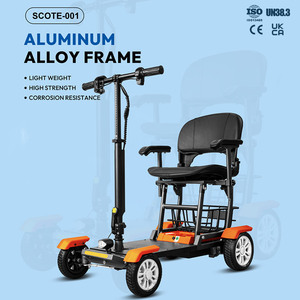
Wholesale Lithium Battery Motorized Wheelchair Foldable Electric Wheelchair Reclining for Disabled
Get Catalog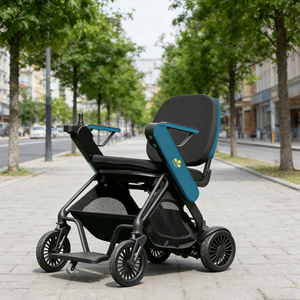
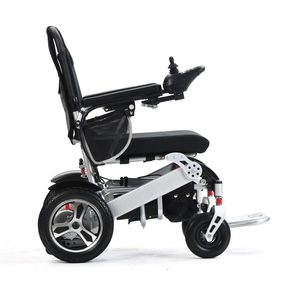
Fully Automatic Intelligent Folding Electric Scooter Wheelchair ZW505 Model 100kg Load Capacity Elderly Disabled APP Wheelchair
Get Catalog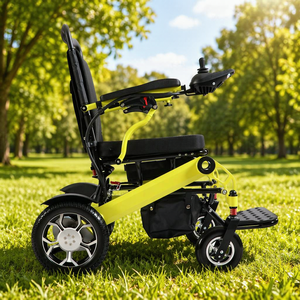
Portable Folding Power Wheelchair - Lightweight Electric Mobility Scooter Strong Motor
Get Catalog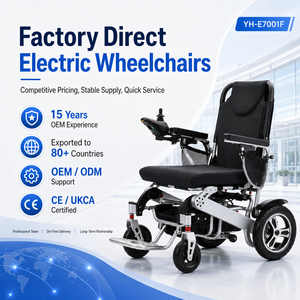
New Arrival Customized Color Motorized Wheelchairs Aluminum Alloy Smart Reclining Electric Wheelchair
Get Catalog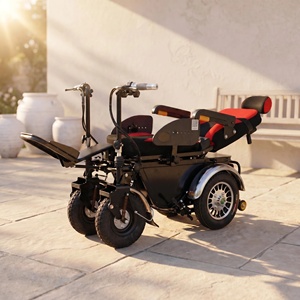
Motor Driven Standing Wheelchair With Electric Lifting Legrest Electric Wheelchair
Get Catalog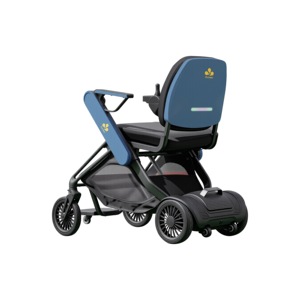
ZW505 APP Auto-Folding All-Terrain Electric Wheelchair For Adults Elderly 100kg Load Capacity 1.5-6km/h Speed Handicapped Travel
Get Catalog
ENLIDA EH0190 Folding Electric Wheelchair 250W*2 Motor 12Ah Lead-Acid Battery 120kg Load 16" Rear Tires Physical Therapy
Get Catalog
Clinical Biomechanics & Materials Science
Evaluating Wheelchair Cushion Manufacturing Excellence
Why procurement officers must look beyond unit price to evaluate fluid dynamics, tissue ischemia prevention, microclimate control, and shear stress mitigation.
Pressure Ulcer Prevention & Immersions
Prolonged wheelchair confinement places extreme hydrostatic pressure over bony prominences—specifically the ischial tuberosities and sacrum. Tier-1 manufacturers utilize anatomical contouring to achieve peak pressure redistribution under 32 mmHg.
Prevents Stage 1–4 Pressure Injuries (Decubitus Ulcers)
Shear Stress & Tissue Distortion Mitigation
When users shift positions, superficial skin layers bind to seat covers while deep muscle tissues deform over bone. Advanced fluid gel and elastomeric honeycomb matrices reduce coefficient friction below 0.15 µ.
Dual-Layer Shear Reduction Covers
Microclimate & Vapor Permeability Control
Heat buildup increases subcutaneous metabolic demands by 10% per degree Celsius. Modern cushions integrate open-cell reticulated foams, phase-change materials (PCM), and 3D spacer mesh covers to maximize heat dissipation.
Dissipates Humidity & Moisture Accumulation
Procurement Decision Matrix
Technical Specification Comparison of Wheelchair Cushion Technologies
A comprehensive engineering breakdown designed to assist medical equipment distributors in matching cushion substrates with patient risk profiles.
| Cushion Substrate Technology | Pressure Redistribution Efficacy | Postural Stability Rating | Maintenance Required | Weight Profile | Ideal Clinical Use Case |
|---|---|---|---|---|---|
| High-Resilience Polyurethane (HR Foam) | Moderate (35–42 mmHg) | High Stability | Very Low (Dry Clean) | Ultra-Light (0.8–1.2 kg) | Low-to-Medium Ulcer Risk, Active Wheelchair Users |
| Viscoelastic Memory Foam + Fluid Gel Hybrid | High (25–30 mmHg) | Superior Contouring | Low (Periodic Gel Kneading) | Medium (1.8–2.5 kg) | High Ulcer Risk, Asymmetric Pelvic Obliquity |
| Interconnected Pneumatic Air Cells (Roho-style) | Maximum (< 20 mmHg) | Moderate (Requires Tuning) | High (Daily Pressure Checks) | Lightweight (1.1–1.5 kg) | Stage 3–4 Ulcer Treatment, Severe Spinal Cord Injury |
| Thermoplastic Elastomer (TPE) Honeycomb | High (22–28 mmHg) | High Stability | Zero Maintenance | Medium (1.4–1.9 kg) | High Moisture / Incontinence Risk, Active Dynamic Users |
Strategic Foresight
Future Procurement & Sourcing Trends in Wheelchair Cushions
Understanding where the global assistive technology market is moving ensures distributors optimize supply chain agility and retain competitive margins.
1. IoT Smart Cushion & Sensor Integration
Leading factories are embedding micro-thin flexible piezoresistive sensor arrays into cushion top layers. These sensors wirelessly stream real-time pressure mapping data to mobile applications or nurse stations, alerting caregivers when a user requires repositioning.
Smart Telehealth & Remote Care Ready
2. 3D Digital Pressure Sculpting & OEM Customization
The era of standardized mass-foam cutting is rapidly yielding to 3D scanning and additive manufacturing. Suppliers now utilize 3D pressure mapping files taken by occupational therapists to automated CNC foam routers or 3D lattice printers, delivering custom-contoured cushions in under 72 hours.
On-Demand OEM & Custom Anatomical Molds
3. Circular & Eco-Friendly Medical Polymers
Global regulatory bodies like the EU Medical Device Regulation (MDR) are tightening requirements around phthalates, halogenated flame retardants, and VOC emissions. Premium suppliers are transitioning to bio-based polyurethane foams, recyclable thermoplastic gels, and OEKO-TEX certified fluid-impermeable fabrics.
REACH & RoHS Eco-Compliance

Why Partner With Us
State-of-the-Art Assistive Mobility Manufacturing Capabilities
Anrace operates as a premier medical equipment manufacturer, specializing in power wheelchairs, manual wheelchairs, walking aids, and orthopedic seating systems. We empower global brands and institutional healthcare providers through robust engineering and flexible OEM contracts.
-
ISO 13485 & Quality Management Systems: Fully certified manufacturing pipelines ensuring rigorous multi-stage quality control from raw chemical polymer synthesis to final drop testing.
-
End-to-End OEM & ODM Customization: Custom branding, specialized dimensions, bespoke upholstery stitching, and custom density foam compounding to meet local regulatory specs.
-
Global Export & Supply Chain Reliability: Seamless international shipping compliance, door-to-port logistics support, and low minimum order quantities (MOQs) for competitive distributor margins.
Frequently Asked Questions
Wheelchair Cushion Procurement FAQ
Critical answers addressing technical specifications, MOQ requirements, international compliance, and private labeling.
What medical certifications are mandatory when importing wheelchair cushions into North America and Europe?
For European distribution, products must comply with EU MDR 2017/745 as Class I medical devices, carry CE marking, and adhere to ISO 10993 cytotoxicity and skin irritation standards. For the United States, manufacturers must be registered with the US FDA 510(k) (or fall under Class I exempt listing) and meet CAL 117 or FAR 25.853 flame retardancy regulations.
How do factory engineers verify the pressure distribution claims of a cushion?
Factory R&D laboratories utilize dynamic pressure mapping systems (such as FSA or XSensor arrays) placed between a standardized anthropometric ISO buttock model and the cushion surface. Tests record peak pressure index (PPI), immersion depth, contact area surface (cm²), and pressure gradient build-up across various tilt angles.
What is the typical Minimum Order Quantity (MOQ) for custom OEM wheelchair cushion orders?
Standard catalog products usually have an MOQ of 50 to 100 units per model. For bespoke OEM customization—including custom foam mold tooling, branded logo embroidery, and custom outer fabric coatings—the baseline MOQ generally starts at 300 to 500 units depending on raw material sourcing requirements.
How do fluid gel cushions perform compared to pneumatic air cell cushions over extended use?
Fluid gel cushions excel at providing immediate postural stability, shear force reduction, and zero-maintenance operation, making them ideal for high-volume hospital ward rotations. Pneumatic air cell cushions offer superior peak pressure relief for high-risk patients but require continuous air pressure monitoring to prevent bottoming out.
Can custom outer covers be designed for incontinence and high-temperature sanitization?
Yes. OEM suppliers produce outer covers using multi-stretch polyurethane-coated fabrics that are 100% fluid-proof, antimicrobial, and wipe-clean compatible with hospital-grade disinfectant wipes (chlorine/alcohol based). Sealed sonic-welded seams are also available to prevent fluid ingress into the foam core.
Partner With a Leading Assistive Mobility Equipment Manufacturer
Request our comprehensive 2026 product catalog, wholesale pricing tier matrix, and OEM technical specifications tailored for your market.