
Featured Assistive Mobility & Bed Rail Solutions
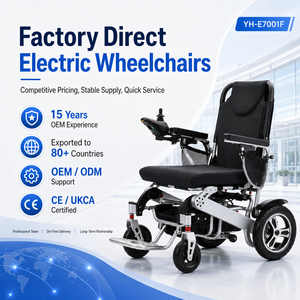
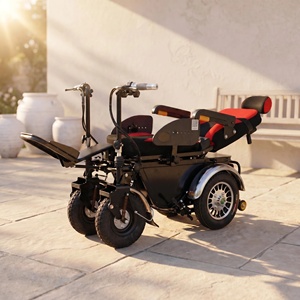
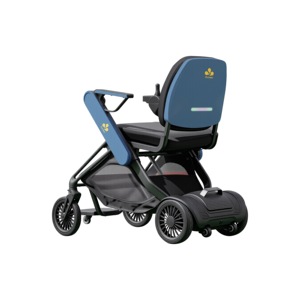
Explore our clinical-grade powered mobility, patient transfer systems, and ergonomically certified bed rails designed for international healthcare institutions.
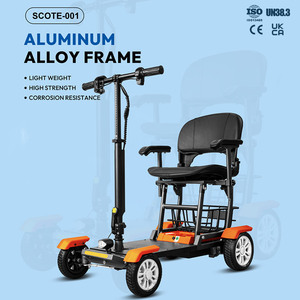
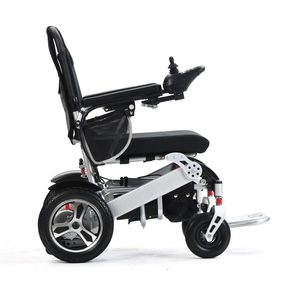
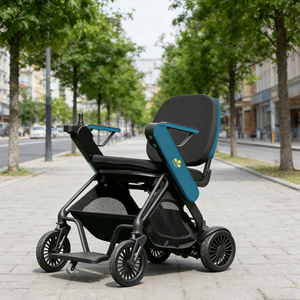
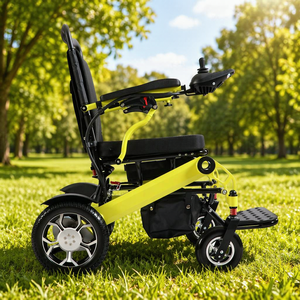

Engineering & Industrial Capabilities
We combine advanced mechanical engineering with clinical insights to deliver high-reliability bed safety hardware and patient mobility systems.
IEC 60601-2-52 Compliance
Our bed safety rails are engineered strictly to mitigate patient entrapment risks, passing dynamic vertical load tests, fatigue stress testing, and latch security evaluations mandated by North American and European healthcare authorities.
Aviation-Grade Metallurgy
Utilizing cold-drawn 6061-T6 aluminum alloys and heavy-gauge structural Q235B steel tubing, our bed rails provide optimal strength-to-weight ratios, delivering up to 250kg static load-bearing capacity without structural deflection.
End-to-End OEM & ODM Service
From concept sketching, mold design, and prototype validation to mass production and private-label packaging, our dedicated engineering team turns custom client specifications into market-ready medical hardware.
Industry White Paper: Next-Generation Medical Bed Rail Engineering & Global Procurement Trends
In the rapidly evolving global healthcare equipment sector, fall prevention and bed mobility assistance represent two critical pillars of patient care safety. Bed rails—also designated as medical bed safety guards, assist bars, and side rails—have transitioned from passive structural barriers to highly active, ergonomically synchronized safety systems. As a leading bed rail manufacturer and global exporter, our facility integrates clinical biomechanics, material science, and precision automated robotics to redefine bed rail durability, safety compliance, and operational utility for acute care, long-term nursing, and home rehabilitation environments.
1. Biomechanical Safety Engineering & Entrapment Mitigation
Patient safety remains the paramount benchmark in hospital bed component design. Historical analysis of hospital bed incidents revealed that improper rail dimensions and excessive gap tolerances created hazards regarding head, neck, and limb entrapment. The U.S. Food and Drug Administration (FDA) Hospital Bed Safety Workgroup (HBSW) and international regulatory bodies establishing the IEC 60601-2-52 standard have defined seven critical zones of entrapment vulnerability.
Our engineering architecture addresses these risk vectors directly through advanced geometric profiling:
- Zone 1 (Within the Rail): Bar spacing is restricted to under 120mm to prevent head passage.
- Zone 2 (Under the Rail / Between Rail Supports): Reinforced lower mounting bars eliminate dynamic sag when vertical force is applied.
- Zone 3 (Between Rail and Mattress): Anti-compression structural design prevents soft-tissue trapping between the inner rail wall and mattress edge.
- Zone 4 (Under Rail at Ends): Rounded edge profiles and smooth corner radii remove sharp pinch points during mechanical lowering.
2. Material Selection & Advanced Surface Technologies
The operational longevity of a medical bed rail depends upon structural material integrity and surface resistance to aggressive chemical disinfectants. We utilize high-grade materials tailored to specific clinical load requirements:
| Material Type | Structural Yield Strength | Corrosion & Chemical Resistance | Primary Application Segment |
|---|---|---|---|
| 6061-T6 Extruded Aluminum | ≥ 240 MPa | Anodized finish; immune to hospital alcohol wipe degradation | Ultra-lightweight homecare & portable assist rails |
| Q235B Carbon Structural Steel | ≥ 235 MPa | Thermosetting silver-ion antimicrobial powder coating | Heavy-duty hospital beds & bariatric care rails |
| High-Impact ABS / Polypropylene | Flexural Strength ≥ 65 MPa | UV-stabilized, seamless molded liquid-proof surface | Ergonomic drop-down side panels & controller integration |
Furthermore, our proprietary Silver-Ion Antimicrobial Powder Coating is electrostatically applied and heat-cured at 200°C. This surface treatment actively inhibits 99.9% of bacterial growth (including MRSA and E. coli) across 24-hour cycles, supporting rigorous hospital infection control protocols.
3. Technological Evolution: Smart Bed Rail Integration
The medical hardware landscape is experiencing a paradigm shift towards smart bed ecosystem integration. Modern bed rails are no longer stationary metal bars; they serve as interactive patient-care interfaces. Key innovations integrated into our export line include:
A. Embedded Membrane Controls: Dual-sided touch keypads molded seamlessly into inner and outer rail walls allow patients to adjust backrest elevation and caregivers to lock out motorized functions for safety.
B. Micro-Switch Dual-Latch Systems: To prevent accidental rail collapse, our patented locking mechanism requires a two-step release (simultaneous squeeze-and-push). Built-in micro-switches transmit electronic signals to the central nurse call system if a rail is left unlatched while the bed height is elevated.
C. Angle Indicator Visual Gauges: Integrated mechanical bubble or digital tilt sensors provide instant visual confirmation of Trendelenburg / Reverse-Trendelenburg angles and backrest inclination, facilitating precise clinical positioning for pulmonary therapy.
4. Global B2B Procurement Trends (2025–2030 Insights)
As global demographic shifts increase demand for both institutional and home-based long-term care, international B2B buyers—including medical equipment distributors, hospital procurement boards, and brand importers—are adjusting their sourcing strategies:
Shift 1: High Demand for Tool-Free Modular Quick-Attach Systems: Homecare distributors prioritize bed rails that can be installed on standard box springs or adjustable bed frames without specialized tools. Universal clamp adapters and slide-under flat-plate assemblies are rapidly replacing bolt-on configurations.
Shift 2: Supply Chain Resilience & OEM Customization: Global buyers are moving away from off-the-shelf trading products toward direct relationships with certified original equipment manufacturers (OEMs). Direct manufacturer partnerships offer custom color matching, localized branding, customized rail length adjustments, and compliance documentation for rapid FDA/CE regulatory clearing.
Shift 3: Focus on Bariatric Weight Capacities: With rising global rates of metabolic disorders, standard 100kg-rated rails are being upgraded to 180kg–250kg heavy-duty ratings across standard institutional product lines.
State-of-the-Art Quality Control Architecture
Every bed safety rail and mobility device passing through our assembly lines undergoes strict multi-stage testing to ensure total clinical reliability.
Robotic Welding Precision
Fully automated 6-axis ABB robotic welding stations guarantee 100% consistent weld penetration, eliminating weak joints and structural micro-cracks under repetitive stress loads.
100,000-Cycle Latch Fatigue Testing
Pneumatic test rigs subject our dampening drop-down latches and spring-loaded pins to continuous cycle testing under full load to ensure lifetime mechanical operation without dynamic failure.
Salt-Spray Corrosion Resistance
All steel components endure a 96-hour neutral salt spray test (ASTM B117 standard) to ensure surface coatings withstand maritime transport oxidation and humid tropical healthcare environments.
Frequently Asked Questions for B2B Sourcing
Direct technical and commercial answers for healthcare distributors, hospital purchasing managers, and OEM partners.
Q: What international safety certifications do your bed safety rails possess?
Our manufacturing facility is ISO 13485:2016 certified for medical devices. Our bed rail products fully comply with IEC 60601-2-52 standards, hold European CE certification under MDR (EU) 2017/745, and possess FDA 510(k) clearances for North American distribution.
Q: Can you manufacture custom-dimension bed rails to fit specific hospital bed models?
Yes. We specialize in OEM/ODM customization. Our engineering team can adjust mounting bracket hole spacing, rail length, drop-down hinge distance, tubing diameter, and powder coating colors according to your technical drawings or physical bed frame samples.
Q: What is your typical Minimum Order Quantity (MOQ) for wholesale/OEM shipments?
For standard production models, our base MOQ starts at 100 units. For fully customized OEM orders involving specialized stamping dies or unique plastic injection molds, MOQ ranges from 300 to 500 units depending on the complexity of the components.
Q: How do you test for bed rail entrapment prevention before shipping?
Each batch undergoes dimensional verification using standardized cone gauges specified in IEC 60601-2-52. We physically measure all gap dimensions between bars, under the rail, and near the headboard/footboard under structural load simulation to guarantee zero entrapment vulnerability.
Q: What packaging standards are used to protect powder-coated finishes during ocean freight?
We utilize heavy-duty 5-ply corrugated export cartons. Each bed rail is individually wrapped in anti-scratch EPE foam insulation sheeting, fitted with reinforced corner protectors, and moisture-sealed with desiccant packs inside heavy PE plastic bags before container loading.
Q: What is the standard warranty policy for global B2B buyers?
We offer a 2-year structural warranty on all steel and aluminum bed rail frames, along with a 1-year warranty on mechanical latching springs and dampening gas struts. Replacement spare parts or full replacement units are provided for qualified quality claims.