

1. Comprehensive B2B Procurement Guide: Selecting Bariatric Wheelchair Manufacturers
In the rapidly expanding global medical equipment sector, procurement officers, hospital purchasing managers, and healthcare mobility distributors face escalating demands for specialized bariatric equipment. As adult obesity rates globally rise, the requirement for high-capacity, durable, and biomechanically sound mobility devices has shifted from a niche specialty to a core operational necessity. Selecting the right bariatric wheelchair manufacturers and suppliers requires rigorous technical evaluation beyond simple weight rating labels. It demands an in-depth understanding of structural engineering, metallurgical stress limits, clinical positioning, drive-train torque requirements, and international regulatory compliance.
Bariatric mobility equipment is distinct from standard or lightweight wheelchairs. While standard wheelchairs are typically engineered for user weights up to 100 kg to 120 kg (220–265 lbs), institutional-grade bariatric wheelchairs must safely accommodate patient loads ranging from 180 kg to over 315 kg (400 to 700+ lbs). This physical demand creates exponential increases in torsional flex, frame stress, bearing friction, and brake torque requirements. Consequently, partnering with a manufacturer possessing ISO 13485 certified facilities, Advanced Finite Element Analysis (FEA) testing protocols, and robust quality management systems is paramount for mitigating product failure risks, clinical liability, and costly warranty claims.
2. Structural Engineering Standards and FEA Rigidity Testing in Heavy-Duty Wheelchairs
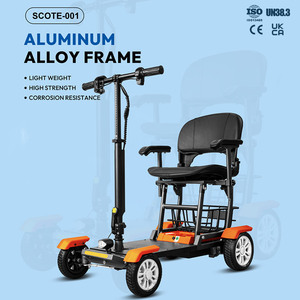
The integrity of a heavy-duty power wheelchair or manual bariatric chair relies entirely on its chassis architecture. Leading OEMs such as Anrace utilize high-tensile carbon steel (Q235/Q345 grades) or aerospace-grade 7077-T6 aluminum alloys. Frame design for bariatric users must incorporate double cross-brace mechanisms or reinforced tubular box frames to eliminate lateral wobble during ingress and egress.
During Finite Element Analysis (FEA) stress testing, frame stress concentrations are calculated under static load, dynamic drop-impact load, and long-term fatigue cycle simulations conforming to ISO 7176-8 standards. The critical structural stress zones in bariatric wheelchairs include:
- Cross-Brace Pivot Junctions: Where scissor-folding mechanisms absorb the highest shear forces during transit over uneven terrain.
- Caster Housing Welds: Subject to immense impact energy during kerb drops and obstacle clearance under maximum user weight.
- Drive Axle Bracket Mounts: Requiring reinforced wall thickness to resist axle deformation under heavy continuous torque.
- Seat Pan Support Rails: Must prevent mid-frame bowing which alters patient pelvis alignment and accelerates tissue shear.
| Specification Parameter | Standard Wheelchairs | Heavy-Duty Commercial Grade | Ultra Bariatric Clinical Grade |
|---|---|---|---|
| Weight Capacity Range | 100 kg – 120 kg (220–265 lbs) | 135 kg – 180 kg (300–400 lbs) | 225 kg – 315+ kg (500–700+ lbs) |
| Available Seat Widths | 16" – 18" (40cm – 45cm) | 20" – 22" (50cm – 55cm) | 24" – 30"+ (60cm – 76cm+) |
| Frame Material | Standard Aluminum / Steel | Reinforced 6061-T6 Aluminum | High-Tensile Q345 Carbon Steel / 7075 Alloy |
| Motor Configuration | 180W – 250W Brushless Dual Motors | 350W – 450W High-Torque Motors | 500W – 750W Worm-Gear Heavy-Duty Drive |
| Braking Systems | Standard Electromagnetic | Intelligent Electromagnetic + Manual Backup | Dual-Stage Electromagnetic & Hydraulic Auxiliary |
| Testing Protocol | ISO 7176 Basic Cycle | ISO 7176 100k Drop Fatigue Cycle | ISO 7176 High-Load 200k Impact & Crash Rated |
3. Motor Torque, Battery Technology, and Drivetrain Engineering
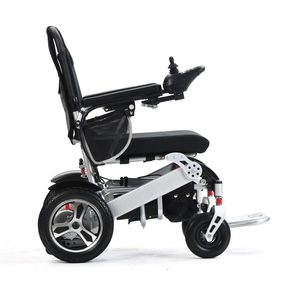
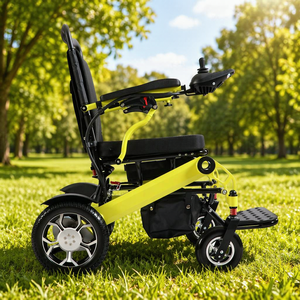
Powering a heavy-duty electric wheelchair with a total gross operating mass (user plus chassis) exceeding 300 kg presents significant powertrain challenges. Standard motor controllers designed for basic mobility devices overheat quickly under sustained incline climbing or terrain negotiation with bariatric users.
Modern motorized bariatric wheelchairs feature heavy-duty brushless DC (BLDC) motors integrated with precision planetary gearboxes. Brushless technology offers superior thermal efficiency, eliminating brush wear while providing higher torque output per watt. Paired with intelligent sine-wave vector controllers, these drivetrains provide smooth acceleration profiles, preventing abrupt jolt starts that could compromise patient stability.
Regarding energy storage, the industry is transitioning rapidly from traditional AGM lead-acid batteries to Lithium Iron Phosphate (LiFePO4) battery chemistry. While sealed lead-acid (SLA) batteries remain cost-effective for static clinical facilities, LiFePO4 cells provide substantial advantages for personal and commercial mobility:
- Energy Density: Delivers 3x the usable range per kilogram of battery weight compared to SLA.
- Cycle Lifespan: Achieves over 2,000 to 3,000 full charge-discharge cycles vs. 300–500 cycles for lead-acid.
- Voltage Stability: Maintains consistent power output even under heavy load discharge without voltage sag.
- UN 38.3 Flight Safety Certification: Enables compliance for international commercial air transport.
4. Clinical Ergonomics, Pressure Injury Prevention, and Patient Positioning
A primary clinical concern when managing bariatric patients is tissue pressure management and pulmonary function optimization. Extended sitting without postural adjustment leads to skin breakdown, deep tissue injury (DTI), and respiratory compromise. Premium bariatric wheelchairs manufactured by industry leaders like Anrace incorporate advanced clinical ergonomics:
Power Tilt-in-Space & Recline Mechanisms: Electric tilt-in-space systems shift the seat frame backwards up to 45 degrees while maintaining a constant hip angle. This shifts the center of pressure away from the ischial tuberosities to the larger surface area of the backrest, significantly improving microcirculation without triggering involuntary spasticity. Power recline, paired with elevating legrests, facilitates lower extremity fluid drainage, reducing dependent edema commonly observed in bariatric populations.
Specialized Cushioning Technologies: Seat cushions must balance immersion, envelopment, and lateral stability. High-specification bariatric seat cushions combine gel-infused viscoelastic memory foam with multi-chamber air cell matrix inserts. This hybrid structure prevents bottoming out under localized pressure spikes while facilitating dissipation of heat and moisture—the two key environmental catalysts for skin maceration.
5. Emerging B2B Procurement Trends & Technology Forecast (2026–2030)
As the global medical equipment market accelerates toward digitization, bariatric mobility procurement is undergoing a technological transformation. Procurement directors must anticipate key trends shaping product demand over the next five years:
IoT Telematics & Remote Fleet Management
Integration of 4G/5G telematics modules into power wheelchairs allows hospital equipment managers to monitor battery health, track real-time GPS locations, and receive automated diagnostic maintenance alerts.
Smart Weight Sensing & Patient Analytics
Embedded load-cell sensors within seat frames provide continuous patient weight monitoring without requiring traumatic patient transfers, transmitting data directly to Hospital EMR systems.
Modular Flat-Pack Shipping Architecture
Innovative quick-release modular frames allow bariatric chairs to be flat-packed for ocean freight, reducing container shipping volume by up to 40% and drastically lowering landed procurement costs.
6. Assessing OEM Manufacturing Capabilities & Vendor Evaluation
When conducting supplier audits for bariatric equipment procurement, international buyers must establish rigorous verification benchmarks. Partnering with a manufacturer requires verifying operational depth beyond product catalogs:
- Automated Robotic Welding Infrastructure: Human manual welding introduces variable joint penetration. Robotic MIG/TIG welding ensures consistent weld seam geometry and fatigue resistance across every frame chassis.
- Regulatory Certifications (FDA 510(k), CE MDR, ISO 13485): Ensure the manufacturer maintains active medical device registration and provides clean technical documentation for seamless customs clearance.
- Customization (OEM/ODM) Agility: Verify that the factory provides engineering support for custom upholstery, extended seat frames, specialized control interfaces (head-array, chin-joystick), and localized color schemes.
- Spare Parts Continuity & Supply Chain Resilience: Evaluate supplier guarantees on long-term replacement part availability (actuators, controllers, tires, bearings) for a minimum of 7–10 years post-production.
Partner With a Trusted Bariatric Wheelchair Manufacturer
Looking for certified heavy-duty power wheelchairs, custom manual bariatric chairs, or OEM manufacturing solutions? Connect directly with our engineering and export team today.
Inquire Now7. Frequently Asked Questions (FAQ) for B2B Buyers & Distributors
Addressing common procurement, technical, and logistics queries from international healthcare equipment distributors and hospital purchasing groups.
What is the standard weight capacity for a commercial bariatric wheelchair?
Commercial bariatric wheelchairs typically start at a maximum weight capacity of 180 kg (400 lbs) and range up to 315 kg (700 lbs) or higher for specialized clinical models. Heavy-duty power wheelchairs manufactured by Anrace undergo static testing at 1.5x their rated load capacity to ensure total structural safety margins under extreme dynamic shock conditions.
Can we request custom seat widths and frame dimensions for OEM orders?
Yes. As a direct manufacturer, Anrace provides full OEM and ODM customization services. Seat widths can be engineered in 2-inch increments from 20 inches (50 cm) up to 30 inches (76 cm), with reinforced frame geometries, custom armrest heights, and specialized upholstery materials tailored to your target market specifications.
What international quality certifications do your bariatric mobility products carry?
Our manufacturing facilities operate under strict ISO 13485 Medical Device Quality Management Systems. Products hold CE certification under the European Medical Device Regulation (MDR 2017/745), FDA registration for the US market, and full compliance test reports under ISO 7176 for wheelchair safety, dimensions, and electromagnetic compatibility (EMC).
How are electric bariatric wheelchairs optimized for incline climbing with heavy loads?
Our electric bariatric models utilize high-torque dual motors (up to 500W-750W per motor) paired with heavy-duty gearboxes and anti-tip wheel assemblies. The motor controllers feature automatic torque boost algorithms that maintain steady speed without stall when climbing ramps or inclines up to 10–12 degrees under maximum user payload.
What is the standard lead time and Minimum Order Quantity (MOQ) for bulk procurement?
Standard OEM production lead time ranges from 25 to 35 days depending on batch size and customization complexity. Initial sample evaluations can be dispatched within 7–10 days. MOQ for standard catalog models starts at 5 to 10 units, while customized private-label production runs typically begin at 20–50 units.
How do you handle spare parts logistics and post-purchase technical support?
We provide 1% to 2% complimentary wearing spare parts (such as tires, fuses, switches, and footrests) with every container order. Furthermore, we maintain a dedicated distributor portal offering 3D exploded parts diagrams, video service manuals, and direct engineering escalation for troubleshooting.