
Featured China Transport Wheelchair Lineup
Explore top-tier motorized, intelligent folding, and ultralight transport wheelchairs manufactured with ISO13485 precision engineering for global OEM/ODM distribution.
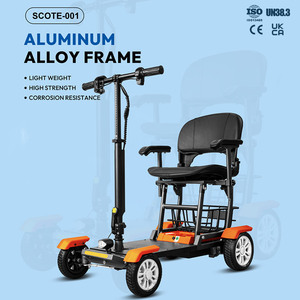
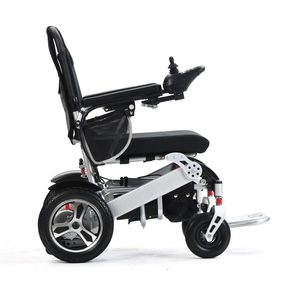
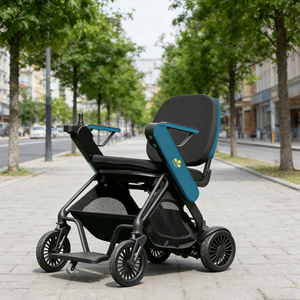
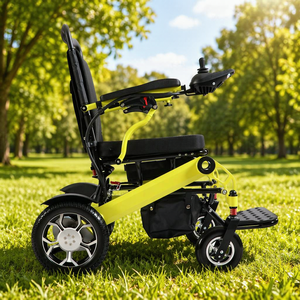
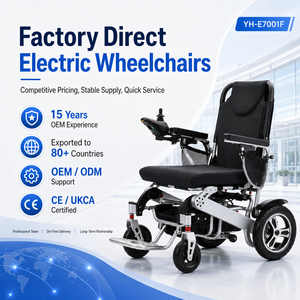
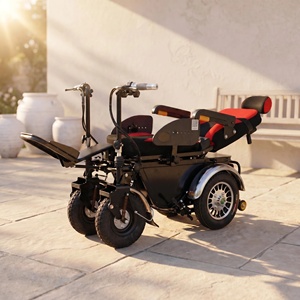
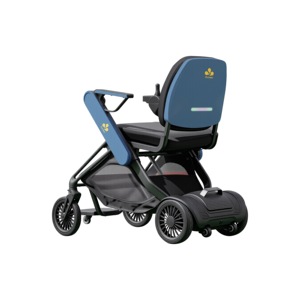
Executive Sourcing Report: Navigating the China Transport Wheelchair Manufacturing Sector
The global assistive mobility equipment market is undergoing an unprecedented structural transition. Driven by accelerating global population aging, rising healthcare expenditures, and rapid innovations in lightweight material science, the demand for China transport wheelchairs has expanded from basic clinical utility to sophisticated personal independence tools. As medical equipment procurement directors, durable medical equipment (DME) distributors, and healthcare retailers evaluate global supply chains, China remains the epicenter of high-volume, cost-effective, and technologically advanced wheelchair manufacturing.
However, securing a reliable, tier-one supplier requires more than checking basic pricing tables. It demands a rigorous understanding of metallurgical engineering, lithium battery compliance standards (UN38.3, MSDS), intelligent control systems (IoT and App integration), and factory quality assurance processes. This comprehensive white paper serves as an authoritative guide for international buyers seeking top-tier China transport wheelchair suppliers, offering granular technical analysis, procurement evaluation matrices, and forward-looking market projections.
Structural Alloy Engineering
Evaluating 6061-T6 Aircraft-Grade Aluminum vs. High-Tensile T700 Carbon Fiber. Optimization of frame strength-to-weight ratios to withstand 120kg-150kg static loads while keeping tare weight under 18kg.
Electromechanical Drives
Comparison of Brushless DC Motors vs. Electromagnetic Braking Actuators. Advanced lithium-iron phosphate (LiFePO4) safety management systems and UN38.3 airline travel compliance standards.
Regulatory Verification
Navigating MDR (EU) 2017/745, US FDA 510(k) clearance, and ISO 7176 multi-axis fatigue testing protocols to guarantee 100% international compliance for commercial import.
1. Engineering & Material Selection in Transport Wheelchair Design
A primary criterion when evaluating a China transport wheelchair manufacturer is the structural integrity of the chassis. Transport wheelchairs are specifically engineered for portability, quick foldability, and effortless transit in vehicles, airplanes, and public transportation. Achieving ultra-lightweight performance without compromising structural load capacity requires advanced metallurgy and automated robotic welding.
| Material Type | Tensile Strength (MPa) | Average Frame Weight | Corrosion Resistance | Ideal Procurement Application |
|---|---|---|---|---|
| 6061-T6 Aluminum Alloy | 310 MPa | 11.5 kg – 14.5 kg | High (Anodized) | Standard Commercial & Hospital Transport (Optimal Cost/Performance) |
| T700 Carbon Fiber Composite | 4900 MPa | 8.2 kg – 10.5 kg | Exceptional (Inert) | Premium Retail & Airline Travel Lightweight Series |
| Q235 Reinforced Carbon Steel | 375 MPa | 16.0 kg – 22.0 kg | Medium (Powder Coated) | Heavy-Duty Bariatric & High-Impact Clinical Transfer Units |
Leading Chinese factories utilize automated TIG (Tungsten Inert Gas) robotic welding arms for aluminum chassis. This eliminates manual weld variance, ensuring that dynamic joint stress points resist micro-fractures under long-term cyclic loading. When reviewing sample units from suppliers, buyers should request non-destructive weld testing reports (such as ultrasonic or X-ray inspection logs) to verify internal frame soundness.
2. Motorization & Drive-Train Innovations: Brushed vs. Brushless DC Systems
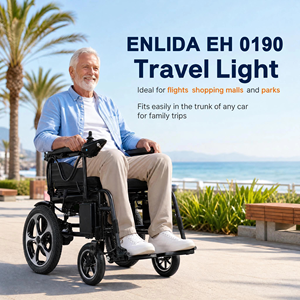
The evolution from manual push-chairs to motorized intelligent transport wheelchairs has fundamentally transformed user autonomy. Sourcing agents must scrutinize the electrical architecture of motorized models like the ZW505 Intelligent Folding Series or the ENLIDA EH0190.
- Brushless DC (BLDC) Motors: Modern transport wheelchairs utilize high-torque BLDC motors ranging from 180W to 250W per wheel. BLDC motors eliminate physical carbon brushes, reducing mechanical friction, operational noise (<50dB), and heat generation while extending battery range by up to 28% compared to traditional brushed motors.
- Electromagnetic Auto-Braking: Safety is paramount in mobility equipment. Top China suppliers integrate intelligent electromagnetic brakes that automatically lock the wheels the instant the user releases the joystick or smartphone controller—preventing rollback on inclines up to 12 degrees.
- Smart App & Telemetry Controllers: Smart mobility is no longer a gimmick; it is an essential procurement differentiator. Advanced models incorporate Bluetooth 5.0 connectivity, allowing caregivers or users to remotely operate the wheelchair, adjust speed governors (1.5 km/h to 6.0 km/h), monitor battery State of Health (SOH), and deploy automatic single-touch folding.
3. Global Regulatory Compliance & Testing Protocols (ISO 7176 Standard)
Exporting transport wheelchairs into regulated markets such as North America, the European Union, and Australasia requires strict adherence to international medical device standards. A reputable supplier must provide complete technical documentation packages (STED) proving compliance with the ISO 7176 series:
ISO 7176-1 & 7176-8: Static & Dynamic Strength
Requires the frame to sustain severe impact tests, drop tests, and dynamic fatigue cycles (typically 200,000 double-drum impacts) without structural deformation or joint failure.
UN38.3 & IEC 62133 Certification
Mandatory for all lithium-ion powered transport wheelchairs. Ensures batteries pass altitude simulation, thermal shock, vibration, short-circuit, and forced internal discharge testing for safe air freight.
Future Sourcing & Procurement Trends (2025–2030 Horizon)
As the international DME procurement ecosystem matures, key technology and logistics trends are reshaping how global buyers select their China transport wheelchair suppliers:
1. Modular OEM/ODM Architecture
Global distributors increasingly demand modular platforms where chassis components, battery packs, controllers, and seating cushions are standardized and interchangeable across product lines to minimize SKU spare-part inventory carrying costs.
2. Ergonomic Pressure-Relief Seating
Integration of high-density memory foam, 3D honeycomb breathable mesh fabrics, and pneumatic postural adjustments directly into transport wheelchair configurations to reduce pressure ulcers during extended seated transfers.
3. Carbon Footprint Reduction
Tier-1 factories are adopting closed-loop aluminum recycling and eco-friendly powder coating technologies to assist European and North American buyers in fulfilling Scope 3 carbon reduction reporting mandates.
Why Partner with Anrace: Factory Capabilities & Technical Superiority
As a global leader in assistive mobility equipment manufacturing, Anrace Assistive Mobility stands at the forefront of China's medical hardware industry. With dedicated manufacturing bases in Rohtak and strategic global sales operations in New Delhi, Anrace bridges state-of-the-art manufacturing precision with international customer care standards.
End-to-End OEM & ODM Customization
From frame geometry modification and custom color anodizing to proprietary joystick programming and branded packaging, Anrace delivers tailored solutions to match your market's exact clinical and aesthetic demands.
Strict 5-Stage Quality Control Protocol
Every unit leaving our assembly lines undergoes Incoming Material Inspection (IQC), In-Process Welding Validation (PQC), Full Electrical Functional Testing (FQC), Dynamic Weight Load Testing, and Pre-Shipment Inspection (OQC).
Frequently Asked Questions (FAQ) for B2B Sourcing
Clear, definitive answers to common procurement, regulatory, technical, and logistics inquiries from international medical equipment buyers.