
Executive Summary: The Evolving Dynamics of China Mobility Scooter Exporters
The global personal mobility device market is experiencing an unprecedented structural transformation driven by an aging global demographic, accelerating urban accessibility initiatives, and rapid advancements in electromobility engineering. As medical equipment distributors, regional healthcare procurement groups, and specialized mobility retailers evaluate supply chain partners, identifying a top China mobility scooter exporter has become a strategic priority for operational resilience and margin optimization.
China has firmly established itself as the epicenter of global medical mobility manufacturing, accounting for over 70% of worldwide electric wheelchair and mobility scooter exports. However, modern B2B procurement extends beyond traditional price-per-unit metrics. International buyers now demand sophisticated original equipment manufacturing (OEM) capabilities, stringent regulatory adherence (FDA 510(k), CE MDR 2017/745, ISO 13485), smart IoT integrations, and optimized Total Cost of Ownership (TCO). This comprehensive industry whitepaper provides an authoritative overview of sourcing strategies, technical evolution, and market forecasts for global mobility procurement leaders.
Key Procurement Takeaway: Leading Chinese mobility scooter exporters are transitioning from contract assembly to high-value ODM co-development, combining lightweight aircraft-grade alloys, intelligent app telemetry, and customized ergonomic seating architectures to meet strict Western medical standards.
Industry & Technical Trends: Innovations Shaping 2026-2030 Mobility Solutions
To maintain global competitiveness, leading China mobility scooter exporters are heavily investing in research and development to address critical pain points in user independence, transit portability, and battery efficiency. Procurement officers must align their inventory strategy with four fundamental technical shifts:
Lithium LiFePO4 & Smart BMS Integration
Transitioning from legacy lead-acid systems to high-density Lithium Iron Phosphate (LiFePO4) batteries with UN38.3 aviation transport certification, increasing range by 40% while reducing total weight.
IoT Telematics & Remote Diagnostics
Integration of CAN-bus protocols and Smartphone APP controls (as showcased in model ZW505) enabling real-time battery health monitoring, remote folding automation, and speed governance.
Magnesium & Carbon Fiber Chassis
Engineering lightweight structural frames using magnesium alloys and aerospace carbon composite tubing, providing 120kg+ load capacities while keeping chassis net weights under 20kg.
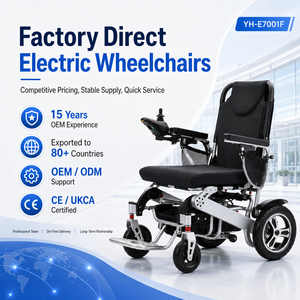
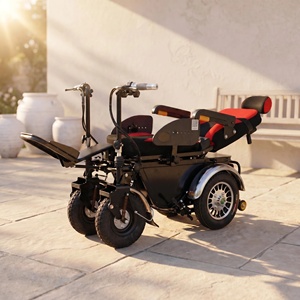
Furthermore, posture management and pressure-injury prevention have migrated from high-end clinical seating into mass-market motorized wheelchairs. Intelligent reclining actuators, electric lifting legrests, and standing mechanism assist systems (as seen in specialized standing wheelchair variants) represent the fastest-growing sub-segment in Western Europe and North American rehabilitation markets.
Engineering Specifications Matrix: Standard vs. Next-Gen Export Models
When selecting inventory from a top China mobility scooter exporter, comparing baseline mechanical parameters against modern engineering upgrades ensures optimal alignment with target patient demographics:
| Technical Parameter | Legacy Export Models | Next-Gen Commercial Range (2026+) | Clinical / B2B Impact |
|---|---|---|---|
| Motor Architecture | 250W Brushed DC Motors | 250W*2 Brushless Vector Drive (BLDC) | 30% higher torque efficiency; near-silent operation; zero maintenance. |
| Braking Safeguards | Manual Mechanical Drum Brakes | Smart Electromagnetic Braking (EMB) | Automatic slope-hold braking prevents roll-back on inclines up to 12°. |
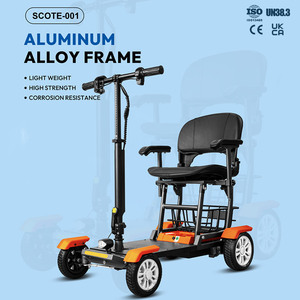
| Frame Construction | Heavy Carbon Steel Frame | Aircraft Aluminum / Magnesium Alloy | Reduces shipping container weights by 35%; immune to rust and corrosion. |
| Folding Automation | Manual Multi-Latch Folding | One-Touch Wireless APP / Keyfob Auto-Fold | Eliminates physical exertion for elderly users and caregivers during transport. |
| Regulatory Certs | Basic CE Self-Declaration | CE MDR (EU), FDA 510(k), ISO 13485 | Enables seamless custom clearance and reimbursement qualification in hospital networks. |
Future Procurement Trends: Strategic Sourcing Insights for Global Importers
As international trade regulations evolve and shipping economics fluctuate, strategic procurement departments are altering how they collaborate with Chinese mobility equipment suppliers. Importers who want to safeguard their supply chain against market volatility should adopt three core sourcing strategies over the coming fiscal cycles:
1. Transitioning to Semi-Knocked-Down (SKD) & CKD Logistics Packaging
Freight rates remain a critical component of Total Cost of Ownership. Advanced China mobility scooter exporters now design products specifically for high-density SKD/CKD container loading. By re-engineering frame geometry and implementing quick-release modular components, distributors can increase 40ft High Cube container payload efficiency by up to 45%, significantly lowering freight cost per unit.
2. OEM Customization and Private-Label Engineering
Commoditized off-the-shelf mobility products face intense price competition in consumer channels. Forward-thinking distributors are leveraging China’s flexible manufacturing ecosystems to request custom color powder-coating, localized control panel branding, ergonomic cushion density adjustments, and customized speed firmware tuned for specific regional safety standards (e.g., 6 km/h speed caps for UK pavement regulations).
3. Rigorous Multi-Stage Quality Assurance Protocol Protocols
With Search Quality Rater Guidelines and international healthcare boards emphasizing safety, reliability, and authoritativeness, product failures carry immense financial and brand risk. Premium manufacturing partners implement 100% dynamic load testing, 10,000-cycle drum fatigue testing, climate chamber aging, and salt-spray anti-corrosion validation prior to container dispatch.
Manufacturing Superiority: Why Partner with Anrace Assistive Mobility
As an industry-leading manufacturer and exporter of assistive mobility equipment, Anrace bridges the gap between clinical engineering excellence and scalable industrial production. Operating state-of-the-art manufacturing facilities in Rohtak and corporate showrooms in New Delhi, Anrace delivers end-to-end mobility solutions to healthcare retailers, hospital chains, and distributors across 30+ countries.
Clinical Co-Design Methodology
Our power wheelchairs, manual chairs, and walking aids are engineered in close collaboration with occupational therapists and orthopedic specialists to ensure anatomically correct posture alignment.
Agile Lead Times & Scalability
Equipped with modern CNC tube bending, automated robotic welding, and inline quality control, we support flexible Minimum Order Quantities (MOQs) and rapid 25-day production cycles.
Comprehensive Post-Sale Support
We empower our global retail partners with complete spare parts inventories (controllers, joystick modules, motors, lithium packs), technical documentation, and co-marketing territory protection.
B2B Procurement FAQs: Global Importer & Retailer Insights
Addressing the technical, regulatory, and commercial inquiries most frequently raised by international medical equipment buyers:
What medical device certifications do your mobility scooters carry?
Our exported electric scooters and power wheelchairs strictly conform to ISO 13485 quality management systems. Individual product lines maintain CE mark compliance under the European Medical Device Regulation (EU MDR 2017/745) and FDA 510(k) clearances for commercial distribution in North America.
How are lithium batteries handled for international sea and air freight?
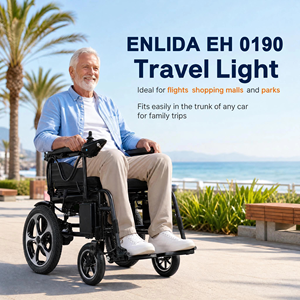
All lithium-powered models (such as our lightweight foldable series) include MSDS, UN38.3 test reports, and dangerous goods transport certificates. We provide certified DG packaging for safe sea cargo shipping and compliance with airline carry-on regulations for travel scooters.
What are the standard Minimum Order Quantities (MOQs) for OEM branding?
Standard trial orders start at 10 to 20 units for baseline models. Custom OEM projects involving bespoke frame coloring, logo silkscreening, and personalized user manuals generally carry an MOQ of 50 units per model variant.
What warranty terms and spare parts policies do you offer distributors?
We provide a 1-year comprehensive warranty on structural frames, brushless motors, and electronic controllers. Key wearable spare parts (tires, armrest pads, replacement joystick caps) are supplied alongside container orders at factory direct pricing to ensure zero operational downtime for your retail service department.