
Featured Intelligent Mobility & Medical Walking Frame Solutions
Rigorous engineering benchmarks, medical-grade alloy frames, and ISO 13485 compliant mobility solutions tailored for global healthcare distributors, hospital networks, and medical equipment importers.
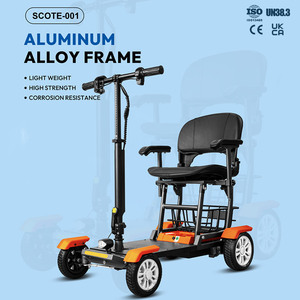
Lightweight Disability Mobility Scooter & Powered Electric Wheelchair
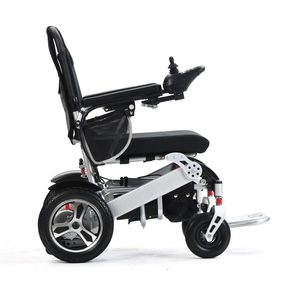
Wholesale Foldable Lithium Motorized Wheelchair with Reclining Function
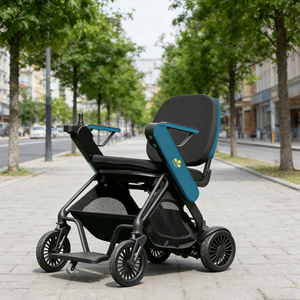
ZW505 Intelligent Auto-Folding Electric Mobility Scooter Wheelchair
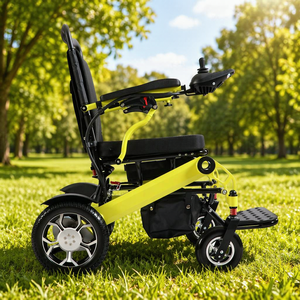
Portable Folding Power Wheelchair with High-Torque Motor Chassis
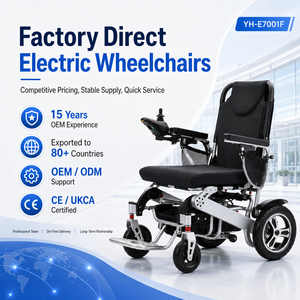
Aluminum Alloy Smart Reclining Electric Wheelchair (Custom OEM Colors)
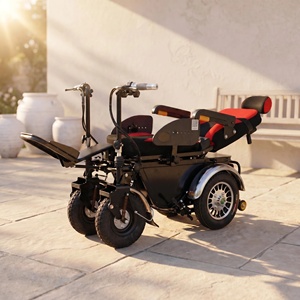
Motor Driven Standing Wheelchair with Electric Lifting Legrests
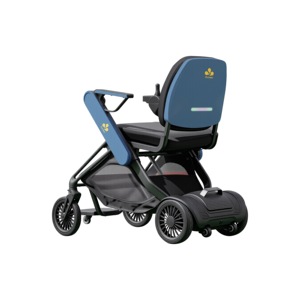
ZW505 All-Terrain Smart Auto-Folding Electric Mobility Scooter
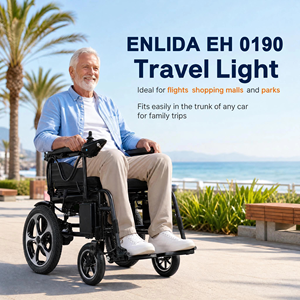
ENLIDA EH0190 Physical Therapy Folding Motorized Power Wheelchair
Evaluating Top 10 Walking Frame Manufacturers: The B2B Quality Benchmark
In the rapidly evolving geriatric care and physical rehabilitation sectors, procurement officers and medical device brand owners require rigorous technical criteria to select tier-one manufacturing partners.
Metallurgical Integrity & Extrusion
Leading factories utilize 6061-T6 and 7075-T6 heat-treated aeronautical aluminum alloys. Wall thickness consistency (tolerance ≤ 0.05mm) ensures optimal weight-to-payload ratios, preventing stress fatigue under continuous dynamic loading.
Robotic TIG Welding Precision
Automated multi-axis robotic pulse TIG welding minimizes thermal deformation, eliminating micro-fissures at structural frame joints. This process provides superior tensile resistance compared to manual welding techniques.
Compliance & Biomechanical Safety
Compliance with ISO 11199 (walking aids manipulated by both arms) and ISO 7176 standards requires dynamic fatigue testing exceeding 200,000 cycles at maximum rated capacity (up to 150kg).
Many standard factories rely on non-heat-treated secondary aluminum scrap, leading to material brittleness, unexpected frame shear under lateral loads, and poor anodization finishes. Enterprise-grade OEM partners mandate 100% virgin alloy extrusions with spectral analysis reporting for every raw material batch.
B2B Sourcing Comparison: Factory Standards Matrix
| Evaluation Parameter | Tier 1 Manufacturers (e.g., Anrace OEM) | Standard Commercial Factories | Impact on Importer / Distributor |
|---|---|---|---|
| Structural Material | Aeronautical 6061-T6 / 7075 Aluminum & Carbon Composite | Recycled Low-Grade Aluminum / Carbon Steel | 35% Weight Reduction, Zero Rusting, 10-Year Frame Lifespan |
| Welding Technique | 100% Robotic Multi-Pass Pulse TIG Welding | Manual Spot Welding | Eliminates Structural Joint Fatigue & Warranty Claims |
| Braking Systems | Dual Loop Ergonomic Auto-Lock Cable/Disc Brakes | Basic Direct-Friction Press Brakes | Enhanced Patient Safety, Compliance with EU Medical MDR |
| Foldability Mechanism | One-Touch Biomechanical Quick-Release Pin / APP Auto-Fold | Stiff Manual Dual-Button Spring Pegs | Superior User Ergonomics, Premium Retail Positioning |
| Quality Certification | ISO 13485, CE MDR (EU 2017/745), FDA 510(k), ISO 11199 | Basic Factory Self-Declaration | Frictionless Customs Clearance & Full Hospital Tender Eligibility |
Global Procurement & Technological Trends (2026–2030)
Understanding shifts in patient demographics, rehabilitation protocols, and materials engineering that are transforming the global walking frame and powered mobility market.
1. Integration of Mechatronics & Smart Assistive Sensors
The boundary between passive walking frames (rollators) and active power mobility is rapidly dissolving. Future-proof factories are embedding gyroscope-based anti-tip algorithms, obstacle-detection sonar arrays, and downhill auto-braking speed regulators. These features prevent falls on inclines and provide telemetry data for physiotherapists via mobile applications (such as the app-controlled ZW505 platform).
2. Light-Weighting via Advanced Carbon Fiber & Hydroforming
Distributors are prioritizing ultra-lightweight frames (under 6.5 kg for rollators, under 14 kg for electric power chairs) to simplify vehicle trunk loading. Hydroformed seamless tubing and 3K carbon-fiber weaves offer unmatched flexural rigidity while reducing freight volume and carbon footprints during global shipping.
3. Regulatory Stringency & Supply Chain Traceability
With the full implementation of the European Union Medical Device Regulation (EU MDR 2017/745) and stringent FDA audit protocols, global buyers can no longer source from unaccredited shadow workshops. Top-tier manufacturers must provide complete supply chain traceability, full material certifications, cleanroom assembly options, and standardized OEM serial tracking.
4. Modular OEM Customization for Regional Ergonomics
Anthropometric dimensions vary significantly across European, North American, and Asian markets. Modern manufacturers provide modular frame architectures allowing customized seat widths (40cm to 55cm), handle height adjustment ranges, specialized pneumatic or solid TPU tires, and custom powder-coated color palettes.
Why Leading Global Brands Partner with Anrace Assistive Mobility
Combining advanced clinical research with industrial manufacturing scale, Anrace stands at the forefront of assistive equipment engineering.
State-of-the-Art Production Facility
Located at Plot No. 11, Sector 31, HSIIDC IMT, Rohtak, Haryana, our specialized facility houses automated CNC tube bending machinery, robotic welding cells, electrostatic powder coating lines, and comprehensive dynamic testing laboratories.
Clinical & Ergonomic Co-Design
Our design team collaborates directly with occupational therapists, orthopedists, and rehabilitation specialists. Every handle contour, braking angle, and frame geometry is engineered to reduce joint stress and support natural gait mechanics.
End-to-End OEM & ODM Capabilities
From rapid 3D prototyping and custom tooling design to private label packaging, user manual localization, and custom color anodization, we provide turnkey manufacturing solutions for global brand owners.
Corporate Showroom & International Sales: UG 18-19, Somdutt Chambers II, Bhikaji Cama Place, New Delhi 110066.
Our dedicated export handling team manages multi-modal container shipping, international compliance documentation (CE, ISO, FDA), and post-sale spare parts inventory distribution for over 30 countries.
B2B Sourcing FAQ: Walking Frames & Mobility Equipment
Answers to common engineering, ordering, and compliance questions from medical equipment buyers and distributors.
Q1: What minimum order quantity (MOQ) is required for custom OEM branding?
For standard production runs, our MOQ typically starts at 50 units per model. For bespoke OEM modifications—such as custom powder-coated frame colors, localized packaging, or specialized branded seat cushions—our baseline MOQ is 100 units. We also support sample orders for distributor clinical trials.
Q2: What certifications are available for international customs clearance?
All Anrace walking frames, rollators, and power wheelchairs are manufactured under ISO 13485 (Medical Devices Quality Management Systems). Our product catalog complies with European CE Medical Device Regulation (EU 2017/745), ISO 11199 structural standards, and relevant FDA listings for North American export.
Q3: How do you ensure frame durability and patient safety?
Each batch undergoes rigorous structural stress testing, including static weight overload tests (up to 1.5x rated capacity), dynamic drop testing, and 200,000-cycle handle fatigue testing on automated rigs. All electric models undergo insulation withstand voltage tests and battery thermal safety validation.
Q4: Can mobility scooters and power wheelchairs be customized for specific terrains?
Yes. Models such as the ZW505 and ENLIDA EH0190 can be customized with high-traction pneumatic off-road tires, upgraded dual 250W/350W brushless hub motors, and high-capacity lithium battery configurations (12Ah up to 24Ah) to suit outdoor, uneven, or hilly terrain environments.
Q5: What warranty coverage and spare parts support do you provide?
We offer a standard 12-month to 24-month factory warranty on main structural frames and core electronic components (controllers, motors, and chargers). We maintain a stocked spare parts inventory—including brake cables, castors, armrest pads, and joystick modules—for immediate global air-freight dispatch.
Q6: What is the typical lead time for full container loading (FCL)?
Standard production lead time for a 20ft or 40ft High Cube container is 25 to 35 calendar days following engineering drawing sign-off and deposit receipt. Expedited manufacturing slots are available for urgent hospital tenders.