
Engineered Mobility & Patient Hoist Product Lineup
Explore our ISO-13485 certified electric power mobility solutions, patient lifts, and customized B2B OEM manufacturing series.
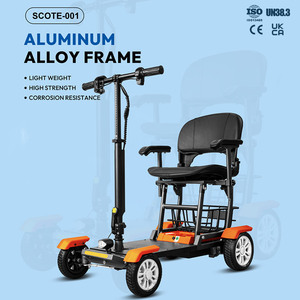
Lightweight Disability Mobility Scooter Electric Wheelchair Powered Mobility Handicapped Scooters
Send an Inquiry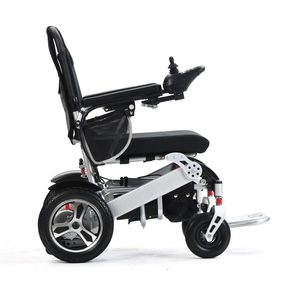
Wholesale Lithium Battery Motorized Wheelchair Foldable Electric Wheelchair Reclining for Disabled
Send an Inquiry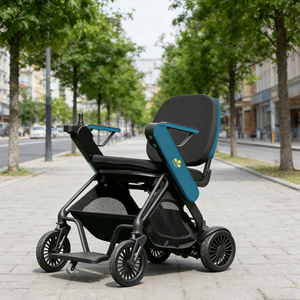
Fully Automatic Intelligent Folding Electric Scooter Wheelchair ZW505 Model 100kg Load Capacity APP Wheelchair
Send an Inquiry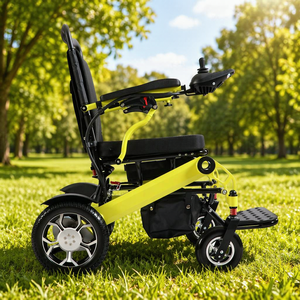
Portable Folding Power Wheelchair - Lightweight Electric Mobility Scooter Strong Motor
Send an Inquiry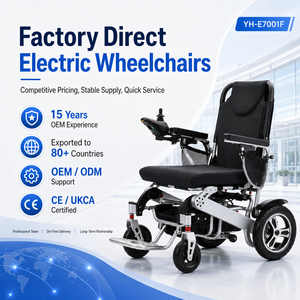
New Arrival Customized Color Motorized Wheelchairs Aluminum Alloy Smart Reclining Electric Wheelchair
Send an Inquiry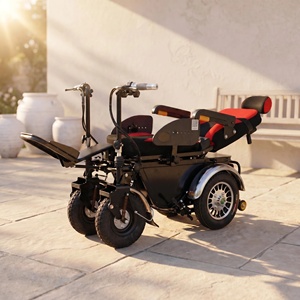
Motor Driven Standing Wheelchair With Electric Lifting Legrest Electric Wheelchair
Send an Inquiry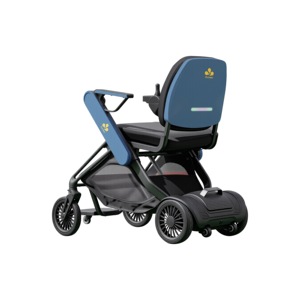
ZW505 APP Auto-Folding All-Terrain Electric Wheelchair For Adults Elderly 100kg Load Capacity Handicapped Travel
Send an Inquiry
ENLIDA EH0190 Folding Electric Wheelchair 250W*2 Motor 12Ah Lead-Acid Battery 120kg Load Physical Therapy
Send an InquiryEnterprise Manufacturing Infrastructure & OEM Capabilities
As a global pioneer in medical equipment manufacturing and custom OEM patient hoist solutions, Anrace operates high-capacity, ISO-certified manufacturing facilities in strategic industrial zones (including Rohtak HSIIDC IMT and international partner nodes). Our operations integrate end-to-end mechanical engineering, robotic structural welding, automated powder coating, and electronic system assembly tailored specifically for hospital, long-term care, and home-care distribution channels.
ISO 13485 Quality Standard
Every electric patient lift, manual hydraulic hoist, and power wheelchair unit undergoes rigorous multi-stage quality assurance. We track dynamic load limits, thermal tolerance of linear actuators, and emergency release mechanisms across 100% of production runs.
End-to-End Customization
Our OEM/ODM services empower institutional brands to customize spreader bar dimensions, frame metallurgy (high-tensile aircraft aluminum vs carbon steel), battery chemistries (LiFePO4 vs Lead-Acid), and soft-touch ergonomic controls.
Global Supply Logistics
With established export pathways across Europe, North America, the Middle East, and Asia-Pacific, our logistics division ensures compliant customs documentation, CE MDR technical files, and FDA 510(k) structural alignment.
Future Procurement Trends in Patient Hoist & Mobility Tech (2026–2030)
The global medical equipment procurement landscape is undergoing a systemic paradigm shift driven by demographic aging, workforce shortages among nursing staff, and stringent workplace safety regulations (such as 'Zero Manual Lift' mandates in acute healthcare facilities). Procurement directors and B2B buyers must align their supply chains with next-generation technological standards:
1. Telematics & Smart IoT Actuator Integration
Future patient hoists are no longer standalone mechanical lifters. Enterprise-grade OEM procurement is leaning heavily toward micro-controller-driven lifting systems equipped with Bluetooth/Wi-Fi telemetry. These smart actuators log total lift cycles, monitor weight overload events, detect battery health deterioration, and send predictive maintenance alerts to facility management dashboards before component failures occur.
2. Transition to Lightweight High-Strength Alloys & LiFePO4 Power Cells
Institutional buyers are systematically phasing out heavy carbon-steel frames and traditional lead-acid batteries in favor of structural aircraft-grade 6061-T6 aluminum alloys combined with Lithium Iron Phosphate (LiFePO4) energy storage. LiFePO4 batteries deliver over 2,500 charge cycles, offer rapid 1-hour charging curves, reduce overall device tare weight by up to 40%, and eliminate the risk of thermal runaway in high-intensity ward environments.
3. Universal Modular Sling Engineering & Anti-Entrapment Mechanics
Standardization across attachment interfaces represents a major procurement vector. OEM buyers are requiring universal 4-point quick-release spreader bars compatible with diverse sling geometries (toilet, amputee, pediatric, bariatric). Furthermore, automated anti-entrapment sensors integrated into lower boom housings prevent patient pinch accidents during descending movements.
Macro Industry Development Dynamics & Market Analysis
To successfully navigate the medical mobility market, wholesale distributors and institutional purchasers must evaluate the macro forces shaping design architecture and manufacturing methodologies.
Bariatric Lifting Demand
Rising global rates of severe obesity have accelerated demand for heavy-duty patient hoists rated for safe working loads (SWL) of 250kg to 350kg (550 lbs to 770 lbs). OEM factories are engineering dual-actuator scissor-lift chassis to distribute load moments evenly.
Home Healthcare Shift
As healthcare reimbursement structures favor home-based rehabilitation, the industry is seeing high demand for ultra-compact, foldable, tool-free disassembly patient lifts that easily navigate narrow 70cm residential doorways and carpeted flooring.
Strict Regulatory Barriers
Global regulatory bodies (EU MDR 2017/745, US FDA, UKCA) require exhaustive clinical evaluations, biomechanical finite element analysis (FEA), and risk management matrices (ISO 14971) for all powered transfer equipment.
Our manufacturing protocols incorporate FEA stress simulation to identify fatigue stress points long before physical prototypes hit the testing rig. By partnering with an experienced OEM manufacturer like Anrace, distributors gain access to pre-validated chassis platforms that dramatically shorten time-to-market and regulatory approval cycles.
Technical Sourcing Whitepaper: Key OEM Evaluation Criteria
When selecting a custom OEM patient hoist manufacturer, procurement officers should strictly evaluate factories based on four fundamental engineering dimensions:
1. Actuator Quality & Linear Motion Reliability
The heart of any electric hoist is its linear actuator system. World-class factories utilize medical-grade Linak or Dewert actuators featuring IPX4 or IPX6 ingress protection against liquid splattering during sanitization. Ensure your OEM supplier incorporates manual mechanical emergency lowering knobs and dual-speed soft-start/soft-stop controller logic to prevent patient startle responses.
2. Chassis Expansion Mechanics & Base Stability
Stability during lateral weight shifts depends on the base expansion system. Evaluate whether the factory offers electric pedal-operated or manual lever-operated leg spreading mechanisms. The wider the expanded footprint (typically up to 1050mm), the lower the center of gravity and the safer the transfer from wide recliners or specialized air mattresses.
3. Welded Frame Metallurgy & Surface Finishing
Structural integrity depends on robotic TIG welding consistency. Request non-destructive weld inspection reports from your factory partner. Furthermore, surface treatment should utilize non-toxic, antibacterial electrostatic powder coating capable of withstanding harsh hospital-grade disinfectant wipes (chlorine-releasing agents, isopropyl alcohol) without chipping or corroding.
4. Electrical Safety & Battery Management (BMS)
Control boxes must conform to IEC 60601-1 medical electrical equipment safety standards. Integrated BMS components should feature automatic low-voltage acoustic buzzers, over-current cutoffs, and wall-mountable charging docks to ensure uninterrupted clinical uptime.
Frequently Asked Questions (FAQ) for B2B Procurement & OEM Manufacturing
Partner with a Leading Custom Patient Hoist Manufacturer
Looking to expand your medical distribution portfolio, engineer a custom patient lift series, or procure high-reliability electric wheelchairs for your regional market? Talk with our OEM technical sales team today.