
B2B Procurement Whitepaper: Engineering Criteria for Commercial Seat Cushion Manufacturing
In the modern commercial landscape spanning office furniture supply, automotive aftermarket accessories, medical rehabilitation equipment, and outdoor living channels, the humble seat cushion has evolved into a highly engineered bio-mechanical apparatus. As a leading China Wholesale Seat Cushion Manufacturer & Factory, our facility integrates advanced polymer chemistry, textile engineering, and ergonomic pressure mapping to deliver solutions that solve chronic postural strain while optimizing supply chain economics for global B2B buyers.
Key Information Gain Insight for Procurement Directors:
Selecting the right seat cushion manufacturer requires evaluating core material viscoelasticity, Indentation Load Deflection (ILD), thermal dissipation coefficients, and vacuum compression recovery thresholds—not merely surface aesthetics or unit price.
1. Core Material Biomechanics: TPE Gel vs. Viscoelastic Memory Foam vs. 3D Air Mesh
To maximize end-user satisfaction and minimize return rates across e-commerce and retail channels, procurement teams must understand how different polymer cores handle static load, weight distribution, and micro-climate temperature control.
- Thermo-Sensitive Viscoelastic Memory Foam: Our open-cell polyurethane memory foam reacts to body temperature and localized weight, dynamically contouring to the pelvic anatomy. By distributing ischial tuberosity pressure across a broader surface area, memory foam minimizes peak pressure points (mmHg) responsible for tailbone discomfort and numbness during prolonged sitting (8+ hours).
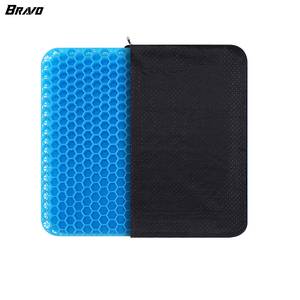
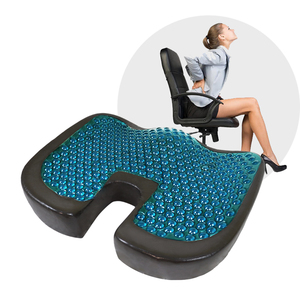
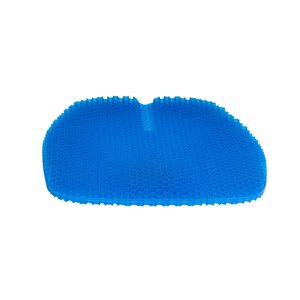
- Hyper-Elastic TPE Gel Honeycomb Grids: Thermoplastic Elastomer (TPE) gel utilizes columnar honeycomb structures that yield laterally under excessive load while retaining structural resilience in non-peak zones. This dual-action response provides immediate weight distribution with superior air ventilation channels, making it ideal for automotive car seat pads and hot climate regions.
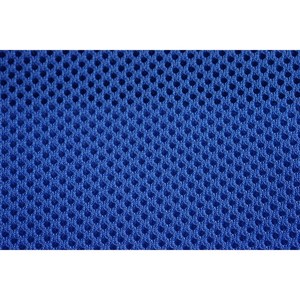
- 3D Spacer Fabric Mesh Matrix: Constructed from warp-knitted polyester micro-filaments, 3D mesh cushions feature a shock-absorbing hollow core that allows 98% air permeability. They are 100% washable, hydrophobic, and anti-fungal, serving high-hygiene applications such as hospital wheelchairs, patio furniture, and post-operative care.
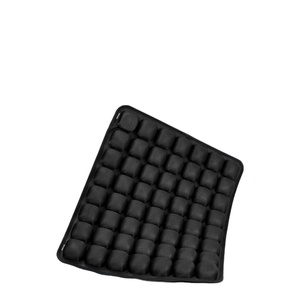
- Air Cell Compression Cushions: Utilizing interconnected TPU air channels, these cushions enable dynamic fluid weight shifting. As the user moves, air transfers between cells to promote capillary circulation and prevent pressure ulcer development in mobility care settings.
2. Comparative Material Technical Matrix
The following technical data matrix illustrates performance parameters across primary seat cushion substrates manufactured in our China production facilities:
| Material Substrate | Density / Hardness Range | Pressure Relief Score | Air Permeability | Vacuum Compression Recovery | Optimal Commercial Use |
|---|---|---|---|---|---|
| Viscoelastic Memory Foam | 45 – 85 kg/m³ | Optimal (9.5/10) | Moderate (Open-cell) | Excellent (Rebounds 100% in 24h) | Office Ergonomics, Sciatica Relief |
| TPE Gel Honeycomb Grid | Durometer Shore A 5-15 | High (9.0/10) | Maximum (Continuous Flow) | N/A (Non-compressible elastic) | Car Drivers, Hot Climates, Wheelchairs |
| 3D Spacer Filament Mesh | 1200 – 2500 g/m² GSM | Standard (7.5/10) | Ultra-High (98% Void Space) | Good (High Tensile Yield) | Outdoor Sofa, Marine, Medical Hygiene |
| TPU Dynamic Air Cell | 0.15 - 0.35 mm TPU Film | Clinical Grade (9.8/10) | Variable Cover Dependent | Deflatable (Zero Volume Freight) | Rehabilitation, Long-Haul Trucking |
Future Procurement & Global Market Sourcing Trends (2026–2030)
As the global market for ergonomic posture support and seating comfort accelerates past USD $4.8 Billion, volume buyers must align their product roadmaps with evolving global sourcing dynamics:
1. Bio-Based and Sustainable Polyurethane Formulations
Global environmental regulations, such as the EU Green Deal and ESG compliance metrics, are driving demand for eco-friendly seating products. Our chemical engineering R&D team has pioneered soy-based polyol memory foams that replace up to 30% of petroleum-derived polyols without sacrificing density, Indentation Load Deflection (ILD), or rebound memory resilience. Importers offering bio-based seat cushions gain significant competitive differentiation in North American and European retail markets.
2. Micro-Climate Management & Hybrid Gel-Foam Formulations
Consumer feedback consistently highlights heat entrapment as a main drawback of traditional memory foam. Future procurement trends heavily favor multi-layer composite structures—such as in-mold gel infusion, phase-change material (PCM) coatings, and integrated TPE gel caps over memory foam bases (as featured in our Bravo Gel Cushion series). These dynamic hybrid cushions regulate contact temperature by 2–3°C over extended sitting sessions.
3. D2C Roll-Pack & Vacuum Packaging Freight Optimization
With international ocean freight rates remaining volatile, packaging efficiency is a critical determinant of gross landed margins. Advanced high-tonnage hydraulic vacuum sealing allows memory foam seat cushions to be compressed to 25-30% of their uncompressed volume. When paired with custom retail color boxes or mailing sleeves, buyers can fit up to 300% more units per 40ft HQ container, slashing per-unit logistics expenses.
4. Flame Retardant and Antimicrobial Surface Finishing
Commercial furniture procurement standards (such as California Technical Bulletin 117-2013, BS 5852, and OEKO-TEX Standard 100) are increasingly requested by commercial office contractors and automotive distributors. Factory-applied silver-ion antimicrobial treatments and inherent flame-retardant outer covers ensure compliance with municipal and corporate safety requirements.
Product Engineering & Technical Manufacturing Lifecycle
Partnering with a specialized factory in China provides OEM/ODM clients with end-to-end control over the product lifecycle—from initial CAD prototyping to mass production lines.
Phase 1: Biomechanical Prototyping & CAD Ergonomic Modeling
Our industrial design team utilizes pressure distribution sensors (measuring ischial contact in N/cm²) to sculpt contour molds. Key anatomical considerations include:
- Coccyx Cutout Zone: Eliminates direct contact between the tailbone and seat surface, relieving spinal compression.
- Contoured Thigh Channels: Distributes lateral pressure along the femoral nerve to prevent lower limb numbness.
- W-Shaped Pelvic Cradle: Promotes optimal pelvic tilt, restoring natural lumbar lordosis without active conscious posture correction.
Phase 2: In-Mold Aluminum Tooling & Foam Pouring
Unlike cheap block-cut polyurethane foam that degrades quickly, our premium seat cushions are produced using high-precision aluminum CNC molds. Liquid polyol and isocyanate reactants are injected into climate-controlled molds, creating a protective outer skin that preserves core structural integrity over years of continuous use.
Phase 3: Textile Integration & Cut-and-Sew Operations
The outer cover represents both a primary tactile touchpoint and a structural barrier. Our automated textile cutting floor processes a wide range of technical fabrics:
- Non-Slip Silicone Beaded Bases: Keeps cushions firmly positioned on leather car seats, office mesh chairs, and smooth wooden dining chairs.
- Breathable Sandwich Mesh Covers: Enhances airflow while protecting the internal core from friction wear.
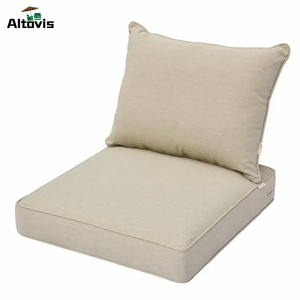
- Waterproof Poly-Canvas with UV Coating: Applied to outdoor deep-seat replacement cushions to resist water penetration and sun fading (AATCC 16 UV rating up to 1000 hours).