Choosing a Motorized Power Wheelchair is not simply a purchase decision. It can reshape how a person moves through home, work, and community spaces. A powered chair may reduce fatigue, support posture, and make longer journeys less demanding. It can also offer smoother control on ramps, uneven pavements, and crowded corridors. Small details matter. A responsive joystick matters. So does a supportive seat.
Dr. Rory Cooper, a wheelchair researcher, Paralympian, and founder of the Human Engineering Research Laboratories, has stated, “Mobility is a human right.” That principle gives this decision real weight. A Motorized Power Wheelchair should support personal goals, not merely replace walking. Users and therapists should consider transfer ability, hand control, turning space, battery range, terrain, and transport requirements. A chair that performs well indoors may struggle outdoors. That difference can change daily independence.
The right model is rarely the most expensive one. It is the one that fits the user’s body and routine. A careful assessment remains essential. Even this approach has limits. Needs can change after illness, injury, or reduced strength. Therefore, professional seating advice and a practical trial should guide the final choice. Picture the daily route: a narrow doorway, a steep curb, a long hallway, and a charging point near the bed. Those details often reveal more than a product brochure. A Motorized Power Wheelchair can provide confidence, but thoughtful matching creates meaningful independence.
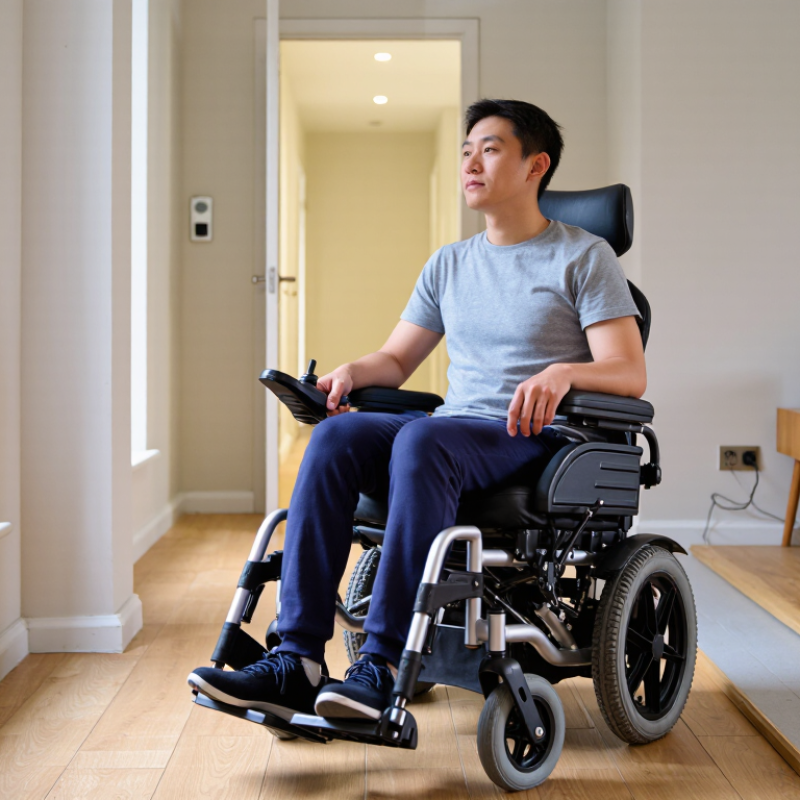
What Is a Motorized Power Wheelchair?
A motorized power wheelchair is a battery-powered mobility device for people who cannot move safely or efficiently with a manual wheelchair. It uses an electric motor, rechargeable batteries, and a control system, often operated through a small joystick. The user can adjust speed, direction, and sometimes seating position. Unlike a manual chair, it does not depend on upper-body strength or another person’s pushing.
The correct model depends on daily routines, body support, home layout, and outdoor surfaces. A professional assessment should examine posture, leg position, pressure relief, and reach. Door widths matter. So do ramps, flooring, and transport needs. In practice, a chair may move smoothly across a kitchen floor but struggle on wet grass or loose gravel. Battery range also changes with weight, slopes, temperature, and tire condition.
Comfort is not an optional detail. Poor seating can create pain, fatigue, or skin problems over time. A trained specialist can help adjust the seat, backrest, foot supports, and controls. Regular charging and basic inspections improve reliability, but batteries eventually lose capacity. The fit is rarely perfect on the first try. Users may need time to learn turning, braking, and safe outdoor driving. A motorized power wheelchair offers greater independence, yet it still has limits that deserve honest attention.
Why Choose a Motorized Power Wheelchair? - What Is a Motorized Power Wheelchair?
| Data Dimension | Typical Information | Why It Matters |
|---|---|---|
| Definition | A motorized power wheelchair is a mobility device driven by electric motors and controlled by the user through a joystick or another input device. | It can provide powered mobility for people who cannot safely or effectively propel a manual wheelchair. |
| Primary Power Source | Rechargeable batteries, commonly sealed lead-acid or lithium-ion battery systems. | The battery type affects charging time, weight, service requirements, and travel considerations. |
| Drive System | One or more electric motors drive the wheels; configurations may include front-wheel, mid-wheel, or rear-wheel drive. | Drive configuration influences turning behavior, stability, and performance on different surfaces. |
| Control Method | A proportional joystick is common; alternative controls may include switches, head arrays, or sip-and-puff systems. | The control option can be matched to the user’s strength, coordination, range of motion, and communication needs. |
| Typical Maximum Speed | Many powered wheelchairs are designed for speeds of approximately 4 to 8 mph, depending on the model and configuration. | Actual speed should be selected according to the user’s control ability, environment, and applicable local regulations. |
| Typical Driving Range | A full charge may commonly support approximately 8 to 20 miles, although range varies significantly. | Weight, terrain, temperature, battery condition, speed, and driving habits all affect real-world range. |
| Seating Support | Depending on the design, features may include adjustable seating, reclining backrests, elevating leg rests, tilt, or seat elevation. | Positioning functions may improve comfort, pressure management, posture, and access to work surfaces. |
| Terrain Capability | Indoor models generally prioritize compact dimensions and maneuverability, while outdoor models may offer larger wheels, suspension, and higher ground clearance. | Choosing the correct configuration helps match the wheelchair to homes, pavements, ramps, and outdoor routes. |
| Turning Ability | Some compact and mid-wheel-drive designs can turn within a relatively small space, while turning characteristics vary by configuration. | A smaller turning radius can make it easier to navigate hallways, elevators, kitchens, and other confined areas. |
| Weight and Portability | Powered wheelchairs are generally heavier than manual wheelchairs because of their motors, batteries, frames, and seating systems. | Vehicle access, ramps, lifts, storage space, and transport rules should be considered before selection. |
| Charging Requirements | The battery is normally recharged with a compatible charger connected to a standard electrical outlet. | Regular charging and following the manufacturer’s battery instructions help maintain availability and battery life. |
| Safety Features | Common features may include electromagnetic braking, anti-tip wheels, seat belts, speed adjustment, lights, and warning signals. | Safety equipment supports controlled stopping, stability, visibility, and safer operation in different environments. |
| Best Suited For | People with limited upper-body strength, reduced endurance, severe mobility limitations, or difficulty using a manual wheelchair. | Powered mobility can support greater independence in daily activities and community participation. |
| Assessment Considerations | A qualified healthcare or mobility professional may assess posture, pressure management, vision, cognition, transfers, home layout, and intended use. | Professional assessment helps ensure that the device and seating system are appropriate for the user’s functional needs. |
Note: Specifications vary by wheelchair configuration, battery type, user weight, terrain, and local safety requirements. The figures above are general reference ranges rather than guaranteed specifications.
FAQS
It is a battery-powered chair with electric motors and joystick controls. It supports people who cannot move safely with a manual wheelchair.
It can reduce shoulder strain in grocery aisles, clinic halls, and uneven sidewalks. Users control direction without pushing heavy wheels.
Measure doorways, ramps, flooring, and turning spaces. A chair may fit the kitchen but struggle in a narrow hallway.
Some models manage uneven paths better than others. Wet grass and loose gravel can reduce traction and stability.
The range depends on weight, slopes, temperature, tire condition, and frequent stops. Advertised distance may not match daily use.
Adjustable seat height, back support, armrests, footplates, and cushions can reduce pressure. Small changes matter.
A qualified mobility specialist can review posture, leg position, transfers, reach, and control access. The first fitting may not be perfect.
Reliable brakes, anti-tip protection, lights, and a stable base are important. Test slow steering near furniture and ramps.
It can support work, visits, and family activities with less fatigue. Curbs, weather, charging needs, and battery limits still matter.
Charge it regularly and inspect tires, controls, brakes, and battery warnings. Batteries eventually lose capacity. I once trusted speed too much; control mattered more.
Conclusion
A Motorized Power Wheelchair is an electrically powered mobility device designed to help people move with greater independence and less physical effort. Unlike manual wheelchairs, it uses rechargeable batteries and a motor controlled through a joystick or another simple interface. Users can adjust their direction and speed, making it easier to travel indoors, outdoors, and across different everyday surfaces.
When choosing a Motorized Power Wheelchair, it is important to consider comfort, battery range, weight capacity, seat support, turning radius, and ease of transportation. Additional features such as adjustable seating, responsive controls, suspension, and safety systems may improve the overall experience. This type of wheelchair can benefit individuals with limited strength, reduced endurance, balance challenges, or long-term mobility needs. By matching the chair’s design and functions to the user’s lifestyle, it can support safer movement, greater confidence, and increased participation in daily activities.