Mobility Equipment Blog & Resources
Expert articles, clinical guides, and healthcare technology innovations from Anrace.
Wheelchairs & Rehab Guides
In-depth insights into power mobility, manual wheelchairs, and patient lift chairs.
Empowering Independent Living
Discover global trends and manufacturing advancements in assistive products.
How to Choose Portable Mobility Walking Aids
Table of Contents
Portable Mobility Walking Aids can make everyday trips more manageable, but “portable” means more than easy to fold. The right choice should fit the person, the route, and the way the aid will be stored. A cane may suit short, familiar walks; a rollator may offer a seat and storage for longer outings. Neither is automatically the better option. Small details matter: a handle that sits too high, a frame that catches on a doorway, or brakes that feel awkward can turn a promising purchase into a daily frustration.
Rehabilitation engineer Rory A. Cooper’s work in mobility and assistive technology offers a useful perspective. A practical principle for this guide is: “Choose for the walk you actually take, not the one you imagine taking.” That is an editorial summary, not a verbatim quotation. It points to the questions this article will explore: Does the aid fold securely? Can it fit in a car trunk or beside a chair? Are the wheels and brakes suited to uneven pavement, tight shops, or wet paths? Is the handle height comfortable, and does the product’s stated weight capacity meet the user’s needs? Check these details in person when possible. A product can look compact online and still feel cumbersome on a bus. A healthcare professional or mobility specialist can help assess fit and safe use. Even then, personal preference matters. The first choice may not be perfect; careful trial and adjustment can reveal what works.
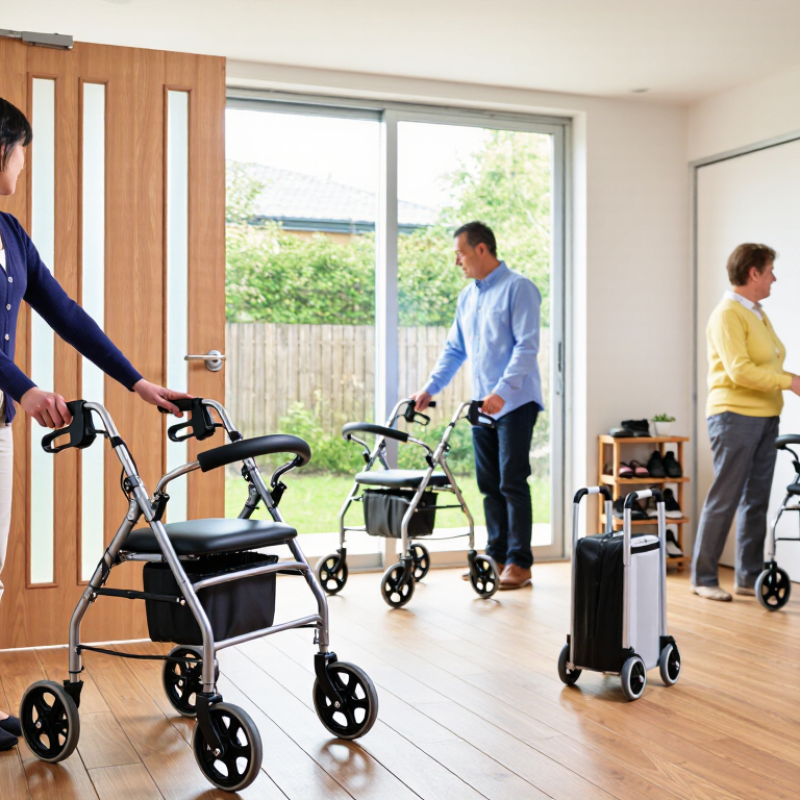
Assess Your Mobility Needs and Daily Walking Conditions
How to Choose Portable Mobility Walking Aids
Assess Your Mobility Needs and Daily Walking Conditions
Start with the walks you actually take: bedroom to bathroom, a grocery aisle, or the bus stop. Note where balance changes, pain appears, or fatigue makes your steps shorter. Small details matter. A narrow doorway, wet pavement, or a curb can change which aid feels manageable. Also check whether you can grip handles comfortably and lift or fold the aid into a car.
Think about distance, surfaces, and transitions—not just walking indoors. The CDC reports that more than one in four adults aged 65 and older falls each year. That statistic does not tell you which aid to choose, but it highlights why your real-world conditions deserve attention. The WHO and UNICEF Global Report on Assistive Technology (2022) estimates that over 2.5 billion people need at least one assistive product, including mobility-related products. Need varies widely.
If possible, test options with a physical or occupational therapist, especially when balance, pain, or recent falls are concerns. Ask whether the aid suits your height, turning space, hand strength, and usual route. Try a short walk over the surfaces you encounter, with someone nearby. A checklist can still miss the awkward moment when a bag, door, or crowded sidewalk gets in the way. Be honest about that. A device that folds neatly but feels unstable outside may not fit your daily routine.
Compare Portable Walking Aid Types and Their Uses
How to Choose Portable Mobility Walking Aids
Compare Portable Walking Aid Types and Their Uses
Portable walking aids suit different needs. A folding cane is light and easy to store, making it useful for mild balance support during short outings. A standard cane offers a steadier grip but may take up more space. Crutches shift more weight away from an injured leg, though using them can require practice and upper-body strength. A rollator, with wheels and hand brakes, supports longer walks and often includes a seat for rest breaks. It is less convenient on narrow stairs or uneven paths.
Think about where and how you will use the aid. A cane may work well on smooth sidewalks, while a rollator can help when fatigue makes frequent rests necessary. Crutches may suit temporary recovery, but the correct height and fit matter. A device that feels stable indoors might be awkward on a crowded bus. Try walking, turning, and stopping with professional guidance when possible. Fit can change comfort more than appearance suggests.
Tips: Check folded size against your car or storage space. Test the brakes and handles before leaving home. Keep in mind that portable does not always mean easy to carry; a rollator can still feel heavy after a long day.
Check Fit, Weight, Folding Design, and Transportability
A portable walking aid should fit your body before it fits your travel plans. With a clinician’s guidance, check that handles sit near wrist height when you stand upright, with relaxed shoulders and slightly bent elbows. Your hands should rest comfortably on the grips, not reach upward or slump forward. Fit matters. A 2022 WHO–UNICEF Global Report on Assistive Technology estimates that 2.5 billion people need at least one assistive product worldwide. That scale reinforces why practical, individual fit should not be treated as an afterthought.
Weight is easy to overlook in a showroom. Lift the aid into your car trunk, carry it a short distance, and ask whether you can repeat that safely on a tiring day. Then test the folding mechanism several times. It should open securely and close without pinched fingers or a struggle. Small details matter. A lighter frame can feel easier to transport, but may not provide the support or stability you need; ask a physical therapist or other qualified professional to help assess the trade-off.
Transportability also depends on your routine. Measure the folded aid against your car’s trunk opening, hallway storage space, and any luggage limits you commonly face. Try loading it while seated, if that reflects how you travel. I would not assume that “foldable” means convenient; hinges, wheels, and seat components can make a compact aid awkward to lift. Check the manufacturer’s weight and folded dimensions, then test the actual device before relying on it away from home.
Evaluate Stability, Safety Features, and Build Quality
When choosing a portable walking aid, check how steadily it stands before considering how easily it folds. Place it on a level floor and press gently on each handle. It should not rock, twist, or slide. A wider base may feel steadier, but it can be awkward in narrow doorways. Try turning between a chair and a table, where small movements reveal problems a straight hallway can hide. Fit matters. The handles should sit near wrist height when you stand upright, with shoulders relaxed. If you lean heavily on them, ask a physical therapist or qualified clinician to check the fit. A single showroom push test can mislead; it captures only one moment.
Inspect the safety details closely. Brakes should engage without excessive force and hold the aid still on a gentle slope. Check that folding locks click firmly into place and cannot release with a light bump. Look for worn rubber tips, loose bolts, sharp edges, and seams that flex under pressure. On a rollator, test the seat and confirm the parking brakes hold before sitting. No seat should replace a separate balance check. Build quality shows in practical details: sturdy joints, smooth hinges, and wheels that track straight over cracks. Lightweight is useful, but very thin tubing or a rattling frame deserves caution. I might overlook a small wobble in a bright store; repeated use can make it harder to ignore. Test the aid with the shoes and bag you normally carry, and notice whether it remains controlled when the load shifts.
Test Suitable Options and Choose the Best Match
How to Choose Portable Mobility Walking Aids
Choosing an aid is a hands-on decision. A device that looks light in a shop may feel awkward after several minutes. Try suitable options with a physiotherapist or occupational therapist, if available. Ask them to check handle height, posture, grip, and how steadily you turn. Your elbow should bend slightly when your hand rests on the handle. Small differences matter.
Test each option on surfaces you actually use: a smooth hallway, a doorway, and a short outdoor path. Notice whether the aid catches on rugs, feels unstable at curbs, or is tiring to lift. For a rollator, practice applying the brakes and folding it before considering storage or transport. For a cane or walker, check that the tips sit flat and the frame does not force you to lean. A familiar route helps, but it can make a poor fit seem better than it is. Test more than once.
The WHO and UNICEF’s 2022 Global Report on Assistive Technology estimated that 2.5 billion people need one or more assistive products, while nearly one billion lack access. This broad figure includes many kinds of products, not walking aids alone; still, it shows why fit and access deserve attention. Keep notes on comfort, control, and effort after each trial. If pain, numbness, or new unsteadiness appears, stop and seek professional advice. Comfort is not the whole story. A device may feel easy indoors yet prove awkward on a bus or beside a crowded café table.
How to Choose Portable Mobility Walking Aids — Test Suitable Options and Choose the Best Match
This chart compares the ground-contact points in common configurations: a single-point cane, a pair of crutches, a standard four-legged walker, and a four-wheeled rollator. Counts describe the typical design, not stability or suitability. Try options with a healthcare professional, since fit, balance, terrain, and personal needs matter.
FAQS
Ask a qualified professional to check the handle height. When standing, your shoulders should relax and your elbows bend slightly. Your hands should rest comfortably on the grips. Fit matters.
Lift it into your car trunk and carry it a short distance. Consider whether you could repeat this on a tiring day. A lighter frame may be easier to move, but may not offer the support you need.
Open and close it several times. Make sure it locks securely and does not pinch your fingers. Check its folded dimensions against your trunk or hallway space.
No. Hinges, wheels, and seat parts can make an aid awkward to lift. I would not trust the label alone. Test the actual device.
Try surfaces from your routine, such as a hallway, doorway, and short outdoor path. Notice whether it catches on rugs or feels unstable at curbs. Test more than once.
Practice using the brakes and folding it. Consider how it feels to lift and store. A compact shape can still be awkward.
Stop if you feel pain, numbness, or new unsteadiness. Seek advice from a qualified professional. Comfort alone is not enough.
Not necessarily. A familiar route can make a poor fit seem better. Try a few different settings, and note comfort, control, and effort afterward.
The WHO and UNICEF report estimated that 2.5 billion people need at least one assistive product, while nearly one billion lack access. This includes many product types, not walking aids alone.
Conclusion
Choosing Portable Mobility Walking Aids starts with understanding where and how you walk each day. Consider the distances you cover, the surfaces you encounter, and whether you need support mainly indoors, outdoors, or while traveling. Different walking aids suit different levels of mobility and situations, so compare their intended uses before deciding.
A good option should fit your height, feel manageable to lift, and fold or store easily if portability matters. Check that its stability, grips, brakes, and overall construction meet your needs. Whenever possible, try suitable options in a safe setting and notice how comfortable and secure they feel during ordinary movement. The best match is one that balances reliable support, ease of use, and convenient transport for your daily routine.

Blog Tags: