Knowledge Base & Insights

Mobility Equipment Blog & Resources

Expert articles, clinical guides, and healthcare technology innovations from Anrace.

Clinical Innovations

Wheelchairs & Rehab Guides

In-depth insights into power mobility, manual wheelchairs, and patient lift chairs.

Global Healthcare

Empowering Independent Living

Discover global trends and manufacturing advancements in assistive products.

0%

Choosing an Electric Patient Lift Chair is not simply a matter of comparing motors, upholstery, or advertised weight limits. It is a decision about safety, dignity, caregiver effort, and daily independence. The World Health Organization’s Global Report on Assistive Technology estimates that more than 2.5 billion people need assistive products today. That number may reach 3.5 billion by 2050. These figures show why dependable transfer equipment matters.

Audrey Nelson, PhD, a recognized safe patient-handling researcher, has stated, “There is no such thing as a safe lift.” Her warning deserves attention. Even a powerful Electric Patient Lift Chair can create risk when the sling, transfer path, brakes, or user posture is unsuitable. OSHA and NIOSH guidance also emphasizes reducing manual patient handling and controlling musculoskeletal injury risks. A chair should therefore be evaluated as part of a complete transfer routine, not as an isolated appliance.

This guide examines lifting range, seat stability, emergency lowering, battery performance, sling compatibility, and cleaning requirements. It also considers room layout. A narrow doorway or loose rug can defeat an otherwise excellent design. Real homes are imperfect. Product descriptions can be imperfect too. I may initially focus too much on technical specifications, while comfort and caregiver confidence are harder to measure. Still, careful comparison can reveal the better choice. Buyers should verify clinical suitability with a qualified healthcare professional, especially when users have fragile skin, limited trunk control, or complex mobility needs.
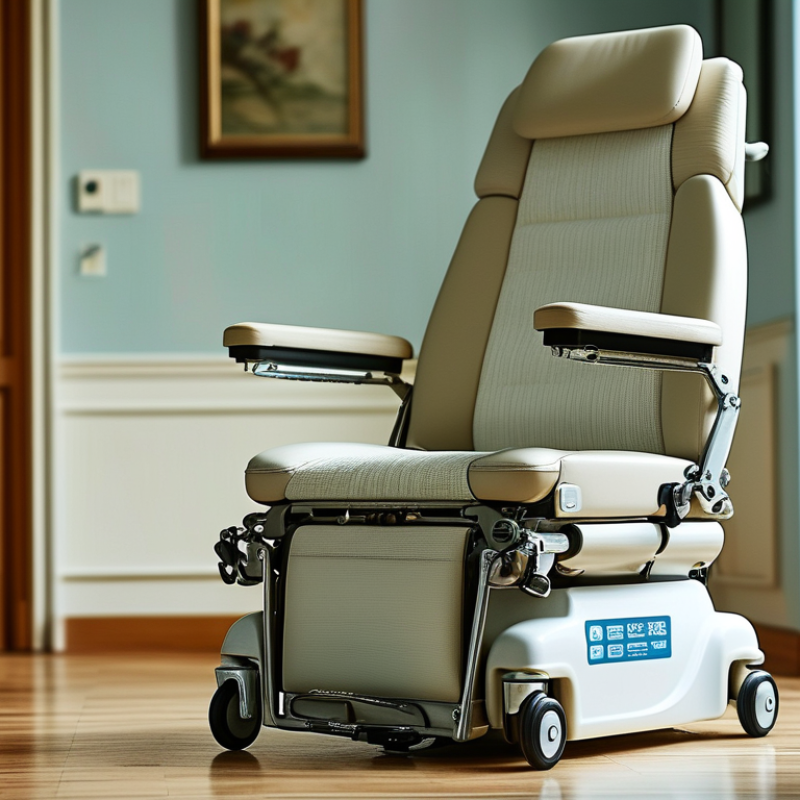
How to Choose an Electric Patient Lift Chair?

Assess the Patient’s Mobility Needs and Transfer Challenges

Choosing an electric patient lift chair begins with the patient’s actual mobility needs, not appearance or extra features. Can the patient stand briefly, bear weight, or follow simple transfer instructions? Someone who can pivot with support may need a different chair from someone with weak legs, poor balance, or limited trunk control.

Observe the daily transfer route. Measure the space beside the bed, wheelchair, and toilet. Note narrow doorways, loose rugs, floor changes, and bathroom thresholds. A chair should support safe movement without forcing the caregiver to twist or lift.

Check the patient’s height, weight, hip width, and sitting posture. The footrest and seat height must allow stable positioning. Small details matter.

Ask how many people usually assist. One caregiver may need powered lifting support, while two caregivers may manage a simpler transfer system. Consider arm strength, joint pain, memory, and fear of falling. The patient may also slide forward or resist movement when anxious.

A trial transfer with a qualified occupational or physical therapist is valuable. They can assess sling placement, control access, clearance, and caregiver body mechanics.

A checklist can miss real-life problems. I might overlook how fatigue changes the evening transfer.

Reassess after illness, surgery, or a fall. The safest choice should match current ability and likely changes, while following the chair’s weight limits and professional guidance.

Compare Lift Chair Types, Sizes, and Weight Capacities

Choosing an electric patient lift chair starts with the user’s transfer pattern, not the upholstery. A lift recliner tilts and raises the seat, helping a person stand from a seated position. A powered transfer chair may also move across rooms, but it needs stronger brakes, wider clearance, and trained caregiver handling. The CDC reports that over 3 million older adults receive emergency treatment for fall injuries annually. Safer transfers matter.

Measure carefully. Record hip width, thigh length, and seated knee height, then add room for clothing and movement. The seat should support the thighs without pressing behind the knees. Check doorway width, turning space, and full recline clearance. A narrow chair can trap the shoulders. A deep chair can leave feet floating. Both are problems. Weight capacity deserves extra margin, rather than matching the user’s exact weight. For example, a 300-pound user may need a 400-pound-rated model when cushions, movement, and daily loading are considered. Some buyers overlook this.

ISO 10535:2021 outlines testing requirements for hoists and similar patient-lifting equipment, including stability and safe working loads. Use its principles as a quality reference, even for home equipment. Check emergency lowering, battery backup, hand-control reach, and washable surfaces. During a trial, observe the user’s feet, knees, and trunk—not just the motor. A smooth lift can still feel unsafe. Ask a physical or occupational therapist to verify fit when balance, weakness, or pressure-injury risks are present. Specifications alone are imperfect. Safety depends on fit, setup, and real use.

How to Choose an Electric Patient Lift Chair? – Compare Lift Chair Types, Sizes, and Weight Capacities
Lift Chair Type Typical Recline Positions Recommended User Profile Typical Seat Width Typical Seat Depth Common Weight Capacity Range Main Advantages Important Considerations
Two-Position Lift Chair Upright and limited recline Users who need basic standing assistance and occasional reclining 18–21 in (46–53 cm) 19–21 in (48–53 cm) 300–350 lb (136–159 kg) Simple controls, compact design, and usually a lower purchase price Limited leg elevation and less flexibility for sleeping or extended rest
Three-Position Lift Chair Upright, reading, and near-flat recline Users who want regular reclining, leg elevation, and improved positioning 19–22 in (48–56 cm) 20–22 in (51–56 cm) 300–375 lb (136–170 kg) Good balance between comfort, positioning, and everyday functionality Requires enough clearance behind the chair and in front of the footrest
Infinite-Position Lift Chair Multiple independent backrest and footrest positions Users needing precise positioning, frequent rest, or pressure-relief adjustments 19–23 in (48–58 cm) 20–23 in (51–58 cm) 300–400 lb (136–181 kg) Allows independent adjustment of the backrest and footrest for personalized comfort More moving parts, higher cost, and a greater need for correct electrical operation
Heavy-Duty or Wide-Seat Lift Chair Usually two-, three-, or infinite-position Users requiring additional seat width, reinforced construction, or a higher capacity 22– treinta in (56–76 cm) 20–24 in (51–61 cm) 400–700 lb (181–318 kg) More interior space and higher rated capacity than standard models Check the exact capacity, seat width, overall width, and floor space before ordering
Dual-Motor Lift Chair Independent backrest and footrest movement Users who need separate adjustment of the upper body and legs 19–23 in (48–58 cm) 20–23 in (51–58 cm) 300–400 lb (136–181 kg) Provides more precise positioning and can improve comfort during prolonged sitting Confirm that both motors operate smoothly and that the hand control is easy to use
Single-Motor Lift Chair Backrest and footrest move together Users who prefer straightforward operation and basic transfer assistance 18–22 in (46–56 cm) 19–22 in (48–56 cm) 300–350 lb (136–159 kg) Easy to operate, generally reliable, and often more economical Offers less independent positioning than a dual-motor design
Measurement and safety checklist: Choose a chair with a published weight capacity at least 50 lb (23 kg) above the user's current weight. Measure the user's hip width, seat-to-knee length, and lower-leg length. The user's feet should rest comfortably on the floor when seated, while the knees remain close to a right angle. Also verify door clearance, chair width, recline clearance, power requirements, emergency lowering features, and whether assistance from a caregiver or healthcare professional is needed.

Review Safety Features, Controls, and Positioning Options

Choosing an electric patient lift chair requires more than checking its maximum weight. Controls and positioning features directly affect daily safety. The World Health Organization reports that falls cause about 684,000 deaths worldwide each year, with adults over 60 facing the greatest risk. A lift chair cannot prevent every fall, but controlled transfers may reduce sudden movement and caregiver strain.

Test the handset from a seated position. Buttons should be clearly marked, responsive, and usable with limited hand strength. Look for emergency lowering, battery-status warnings, and a manual backup system. The chair should stop smoothly, not jerk. Confirm that the base width adjusts easily around a bed or wheelchair. Locking casters matter. So does the noise level.

Positioning requires closer attention. Check whether the backrest, leg support, seat height, and recline angle adjust independently. A nearly flat position may support changing clothes, but it can increase sliding if the pelvis is poorly aligned. The sling or transfer surface must match the chair’s instructions and the patient’s body size. ISO 10535:2021 addresses testing requirements for mobile hoists and lifting accessories, so documented compatibility is preferable to guesswork. OSHA’s hospital injury data reported a 2011 rate of 6.8 cases per 100 full-time workers, more than twice the private-industry rate of 3.1. I would still observe a real transfer before purchase. A polished control panel proves little. Watch the feet, knees, and shoulders. Small details are often missed.

Evaluate Comfort, Materials, Maintenance, and Available Space

Choosing an electric patient lift chair starts with the user’s daily comfort, not its appearance. Check whether the seat supports the hips without pressing behind the knees. The backrest should recline smoothly, while the footrest should support the legs without forcing the ankles forward. Test the handset with limited hand strength. Large, raised buttons help. Small controls can create frustration.

Measure the room before ordering. Leave clear space beside the chair for transfers and caregiver movement. Check door widths, floor transitions, and the distance from the chair to the bed or bathroom. A chair may fit the room but still block a walking path. That mistake is common. I would also measure the user’s height and weight against the chair’s published limits, rather than relying on visual judgment.

Material choice affects comfort and maintenance. Breathable upholstery may reduce heat during long sitting, while moisture-resistant surfaces are easier to clean after spills. Inspect seams, hinges, and exposed cables regularly. Follow the care instructions, and disconnect power before cleaning electrical parts. Avoid harsh chemicals unless the manufacturer specifically permits them. During a real trial, caregivers should operate the lift several times. A quiet motor is useful, but dependable movement matters more. My first impression would not be enough; comfort can change after twenty minutes, especially when posture is uneven.

Check Power Requirements, Warranty Coverage, and Overall Cost

How to Choose an Electric Patient Lift Chair?

Power requirements affect safety, charging time, and daily convenience. Check the chair’s voltage, battery capacity, charger type, and charging duration. A 24-volt, 5-amp-hour battery stores about 0.12 kilowatt-hours. At the U.S. Energy Information Administration’s 2023 residential average of 16.1 cents per kilowatt-hour, one full charge costs only about two cents. The larger concern is access to a safe outlet. Avoid extension cords unless the manufacturer permits them. Confirm that the charger meets applicable electrical safety requirements, including IEC 60601-1 where relevant. ISO 10535:2021 also provides recognized testing requirements for patient hoists and transfer equipment.

Warranty coverage deserves closer attention than the headline period. Ask whether the warranty covers the motor, frame, controller, battery, charger, and handset separately. Batteries often receive shorter coverage. Labor, shipping, and in-home service may be excluded. That can change the real price quickly. The U.S. Bureau of Labor Statistics’ 2023 injury data continues to show high injury exposure in nursing and residential care work, so dependable equipment can support safer transfers. Still, a warranty cannot replace staff training or routine inspection.

Calculate the overall cost before ordering. Include delivery, installation, replacement batteries, sling compatibility, maintenance, and possible downtime. A lower purchase price may hide expensive service calls. I would request a written five-year cost estimate. It may be imperfect, but vague estimates are worse. Measure doorways and storage space too. A chair that cannot turn beside the bed becomes an expensive obstacle. Keep invoices, inspection records, and charger details in one folder. That small habit can prevent avoidable disputes.

FAQS

What is the difference between a lift recliner and a powered transfer chair?

A lift recliner raises and tilts the seat, helping someone stand. A powered transfer chair may also travel between rooms. It needs stronger brakes, wider clearance, and trained caregiver handling. The chair type should match the person’s transfer routine.

How should I measure the correct chair size?

Measure hip width, thigh length, and seated knee height. Add space for clothing and natural movement. The seat should support the thighs without pressing behind the knees. Check the user’s feet. Floating feet may create instability.

How much weight capacity should the chair provide?

Choose a capacity above the user’s actual weight. A 300-pound user may need a 400-pound-rated chair. Cushions, movement, and repeated daily loading add stress. Matching the exact weight is too close.

What room measurements matter before ordering?

Measure doorways, turning areas, and full recline clearance. Leave space beside the chair for transfers and caregiver movement. Check paths toward the bed and bathroom. A chair can fit the room but still block walking routes.

Which comfort features deserve attention?

The backrest should recline smoothly. The footrest should support the legs without forcing the ankles forward. Breathable upholstery may reduce heat during long sitting. Try the chair for twenty minutes. Comfort can change with uneven posture.

What controls should an electric lift chair have?

Test the handset using the user’s actual hand strength. Large, raised buttons are easier to identify and press. Check battery backup, emergency lowering, and handset reach. A quiet motor helps. Dependable movement matters more.

What power and charging details should I check?

Confirm voltage, battery capacity, charger type, and charging duration. A 24-volt, 5-amp-hour battery stores about 0.12 kilowatt-hours. One full charge may cost only a few cents. Safe outlet access matters more than charging cost.

What should the warranty and total cost include?

Ask whether coverage includes the motor, frame, controller, battery, charger, and handset. Check labor, shipping, installation, and in-home service exclusions. Include replacement batteries and maintenance in the estimate. A low purchase price may hide costly service calls.

How can caregivers evaluate safety during a trial?

Watch the user’s feet, knees, trunk, and balance during several transfers. Caregivers should operate the lift repeatedly. Check seams, hinges, cables, and washable surfaces. Specifications alone can mislead. A therapist should verify fit when weakness or pressure risks exist.

Conclusion

Choosing the right Electric Patient Lift Chair starts with understanding the patient’s mobility level, transfer difficulties, and the amount of assistance required during sitting, standing, or repositioning. Consider different chair types, dimensions, weight capacities, and room layout to ensure the equipment fits both the user and the available space. A suitable chair should provide stable support while matching the patient’s physical needs and daily routines.

Safety and comfort are equally important. Review features such as secure positioning, smooth electric controls, emergency functions, adjustable angles, supportive cushioning, and easy-to-clean materials. Maintenance requirements should be practical for caregivers, with accessible components and clear operating instructions. Finally, check power requirements, warranty coverage, service availability, and the total cost of ownership. Balancing functionality, durability, comfort, and budget will help you select a dependable lift chair that promotes safer transfers and greater independence.

Olivia

Olivia

Olivia is a highly experienced marketing professional dedicated to helping businesses understand how thoughtful products, reliable service, and strategic communication can create lasting value. With a strong understanding of the company’s solutions, customer needs, and industry trends, she brings......