Mobility Equipment Blog & Resources
Expert articles, clinical guides, and healthcare technology innovations from Anrace.
Wheelchairs & Rehab Guides
In-depth insights into power mobility, manual wheelchairs, and patient lift chairs.
Empowering Independent Living
Discover global trends and manufacturing advancements in assistive products.
7 Best Patient Transfer Assistive Chairs for Global Buyers
Table of Contents
- Understanding Patient Transfer Assistive Chairs and Their Role
- Common Chair Designs and Transfer Mechanisms
- Seven Patient Transfer Assistive Chairs and Their Key Features
- How Global Buyers Can Compare Safety, Fit, and Accessibility
- Choosing, Using, and Maintaining a Transfer Chair
- FAQS
- Conclusion
- Related Posts
Choosing a Patient Transfer Assistive Chair is a practical decision with real consequences for users and caregivers. In hospitals, care homes, and home settings, the right design can support safer movement between a bed, chair, and bathroom. Needs vary. A person’s mobility, body size, balance, and ability to follow instructions all affect which features matter. Small details matter. Wheel locks should be easy to reach, footrests should move clear of the transfer path, and seat height should suit the surrounding furniture. Yet no chair removes every risk or replaces an individual assessment.
This guide introduces seven options for global buyers, with attention to transfer style, adjustability, user capacity, comfort, cleaning, and storage. Product specifications should be checked against current manufacturer information, and a qualified health or mobility professional can help assess suitability for a particular user. Buyers should also ask about spare parts, warranty support, delivery, and local service availability. Check the details. A photograph may hide awkward controls or a narrow turning radius. Real-world trials and staff feedback can reveal issues that a product sheet misses. Comfort is personal. A chair that works well for one user may feel unstable or difficult for another. The comparisons that follow are a starting point, not a universal ranking; actual performance depends on the user, caregiver, and care environment. No model fits everyone.
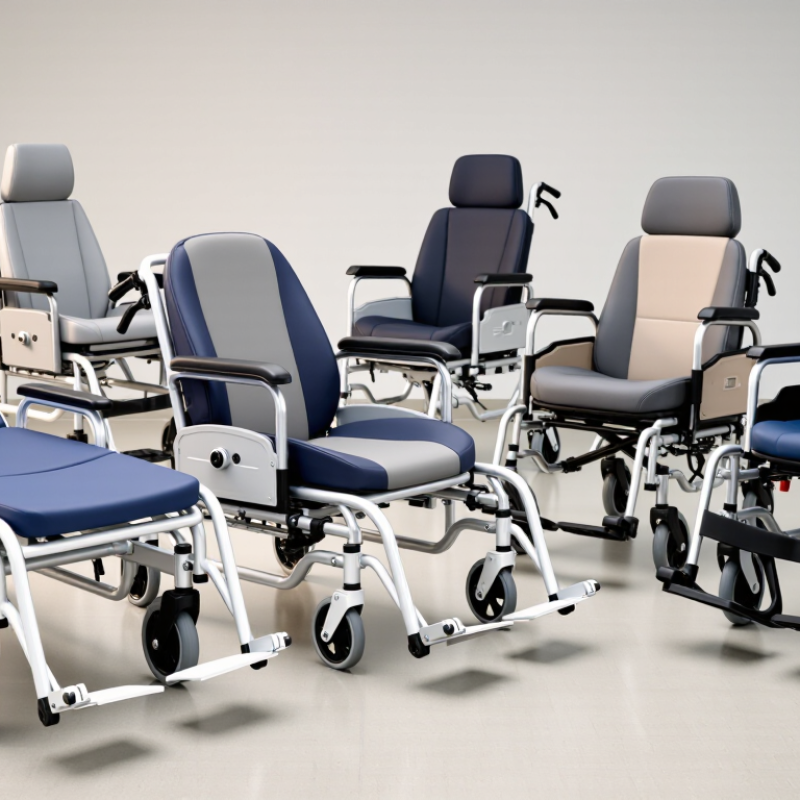
Understanding Patient Transfer Assistive Chairs and Their Role
Patient transfer assistive chairs help move a person between a bed, bathroom, vehicle, or treatment area with less lifting. Their purpose is practical: support more controlled transfers while helping preserve comfort and dignity. Depending on the design, a chair may have locking wheels, swing-away armrests, adjustable foot supports, or an opening seat for toileting. Small details matter. A brake that is difficult to reach can complicate a transfer.
These chairs are not interchangeable with ordinary wheelchairs. Some are intended for short indoor transfers, while others also support seated movement over longer distances. Selection should reflect the person’s balance, ability to follow instructions, body size, and assistance needs. Check doorway widths, turning space, floor thresholds, and transfer heights before purchasing. A chair can look sturdy in a catalogue and still feel awkward beside a narrow bed.
Caregivers should review the instructions and seek qualified guidance when needed. Confirm the chair’s weight capacity, cleaning requirements, brake function, and service support, especially when buying across regions. Product specifications do not replace an individual assessment. And the room may change. A new mattress, bathroom layout, or caregiver’s reach can alter what works. Transfer equipment can reduce some physical demands, but rushed handling may still cause discomfort or a fall.
Common Chair Designs and Transfer Mechanisms
Patient transfer chairs use different frames and movement methods to match a person’s mobility and the room layout. Wheeled commode or shower chairs combine seating with access to bathroom facilities. Their narrow frames can pass through some doorways, but measurements matter. Check the seat width, turning space, and threshold height before choosing one. Small details matter.
Stand-assist chairs support people who can bear some weight and follow instructions. Padded supports and handholds help guide a seated person toward standing, while wheels allow short transfers between nearby surfaces. Other designs use a sling or powered lift to raise and move someone with limited weight-bearing ability. These systems need compatible slings, suitable clearance, and caregiver training. A chair that looks simple may still require practice.
Transfer mechanisms may involve a supported pivot, a sit-to-stand movement, or a lift between surfaces. The right option depends on the person’s balance, strength, pain, and ability to cooperate. No chair fits every routine, and that is easy to forget. Before each transfer, caregivers should check the brakes, footrests, seat position, and stated weight capacity. A smooth transfer can still feel awkward. Trial use with a qualified clinician can reveal fit or handling problems that product descriptions may not show.
Seven Patient Transfer Assistive Chairs and Their Key Features
Patient transfer chairs support different levels of mobility, so compare each design with the user’s abilities. A manual sit-to-stand chair has a supportive sling and hand grips for people who can bear some weight. A powered sit-to-stand chair adds an electric lift, reducing the caregiver’s lifting effort. It needs charging. A full-body sling transfer chair supports users with limited trunk control, using a padded sling and adjustable lifting points.
A rolling shower-commode chair combines a wipe-clean seat, footrests, and a removable pan. Lockable casters are important near wet floors. A wheelchair transfer chair often has drop-down arms and a narrow frame, allowing closer access to beds or toilets. Measure the gap and seat height. A lateral-transfer chair uses a sliding surface to bridge short, level spaces. The surfaces must align closely.
For stair access, a stair-climbing transfer chair may use tracks or wheels, along with secure positioning belts. Trained operation is essential. A compact transport chair folds for storage and uses small wheels for brief indoor trips. It may feel less stable over thresholds. Check weight capacity, brake access, cleaning needs, doorway width, and caregiver strength. Even a suitable chair can feel awkward if handles sit too high or pressure gathers under the thighs. Trial fitting and guidance from a qualified clinician can help identify those issues.
How Global Buyers Can Compare Safety, Fit, and Accessibility
When comparing patient transfer assistive chairs, start with the person’s transfer needs, not the feature list. Check the chair’s stated user-weight capacity and seat dimensions against the individual’s measurements. Measure doorways, bed height, and the tightest bathroom turn. A chair that fits beside a bed may still be awkward near a sink. Confirm how brakes engage and whether footrests move clear during transfers. Ask a qualified clinician or occupational therapist to assess the transfer method and caregiver’s reach. A catalogue photo cannot show every real-world obstacle.
Tips: Measure twice, including the narrowest doorway. Request safety-test documentation, cleaning guidance, and details on compatible accessories. Check whether local technicians can service the chair and obtain replacement parts. These questions matter when equipment crosses borders, where support and specifications may differ. Even careful measuring can miss a tight corner.
Accessibility also depends on daily routines. Can the user reach controls, sit at a comfortable height, and tolerate the seat material? Consider armrest clearance, transfer direction, and whether the chair works with existing beds or commodes. Ask suppliers to clarify dimensions in consistent units and provide load limits in writing. If possible, arrange a supervised trial before purchase. A short trial may reveal discomfort or a difficult turning path that specifications overlook. No single chair suits everyone.
Choosing, Using, and Maintaining a Transfer Chair
Choosing a patient transfer chair begins with the person, not the product list. Check the user’s weight, sitting balance, transfer ability, and need for caregiver support. Measure narrow doorways and bathroom turns; a chair that fits a showroom may not clear a home corridor. Confirm seat height, width, footrest design, and whether the chair suits the transfer method recommended by a qualified clinician. Fit matters. For global buyers, ask about replacement parts, service access, language support, and clear instructions in the destination market. A low purchase price means little if a wheel or brake cannot be replaced promptly.
Before each transfer, explain the steps and check that the user is ready. Position the chair close to the bed or toilet, lock its brakes, and move footrests out of the way when appropriate. Follow the chair’s instructions and the user’s care plan; never exceed its stated load limit. Small details count. After use, clean contact surfaces with compatible products, then inspect wheels, brakes, belts, and fasteners for wear or looseness. Record faults and stop using the chair if a safety part is damaged. A checklist can miss a subtle change in balance, so pause and reassess when a transfer feels different. The right chair still needs careful handling.
7 Best Patient Transfer Assistive Chairs for Global Buyers - Choosing, Using, and Maintaining a Transfer Chair
| Chair type | Best suited to | Typical transfer approach | Key checks before purchase | Use and maintenance considerations |
|---|---|---|---|---|
| Manual sit-to-stand transfer chair | People who can bear some weight and follow instructions, with caregiver assistance. | The user rises with support from the chair’s handles or supports; the caregiver guides a short transfer. | Confirm the user’s weight-bearing ability, seat height, foot support, brakes, and compatibility with the destination seat. | Lock the wheels before transfers and use only as instructed. Check brakes, fasteners, handles, and moving parts regularly. |
| Powered sit-to-stand transfer chair | Users who can participate in a standing transfer but need powered assistance to rise or lower. | An electric actuator assists the standing or sitting movement while a caregiver supervises and positions the chair. | Check charging requirements, emergency-lowering provisions, control accessibility, user compatibility, and local electrical requirements. | Inspect the power system, controls, battery, and emergency functions according to the manufacturer’s schedule. Keep the unit charged as directed. |
| Mobile shower or commode transfer chair | Users who need seated mobility for toileting, bathing, or transfers between a bedroom and bathroom. | A wheeled chair moves the user while seated; some designs provide a commode opening or access over a toilet. | Measure doorways, toilet height, and turning space. Check wheel locks, seat opening, footrests, arm supports, and suitability for wet areas. | Clean and disinfect surfaces after use using compatible products. Dry components as directed and inspect wheels, brakes, and corrosion-prone parts. |
| Reclining or tilt-in-space transfer chair | Users who need supported positioning during seated mobility or cannot maintain an upright posture comfortably. | The chair changes the user’s seated position; transfers may still require a suitable lift or caregiver assistance. | Check positioning needs, head and trunk support, available space, transfer access, and whether the adjustment controls suit the caregiver. | Operate adjustment mechanisms slowly and as instructed. Inspect hinges, locks, upholstery, and supports for wear or damage. |
| Wheelchair with removable or swing-away armrests | Users who can transfer with assistance and need a wheelchair that allows closer access to a bed, toilet, or chair. | Removing or moving an armrest can create side access for an assisted transfer; the wheelchair itself does not lift the user. | Verify that armrests lock securely in place, the seat fits the user, and the chair can approach the transfer surface safely. | Recheck armrest latches and wheel locks before every transfer. Keep upholstery clean and inspect tires, wheels, and footrests. |
| Bariatric transfer chair | Users who need a wider or higher-capacity chair than a standard design provides. | Transfer method depends on the specific model and the user’s mobility; caregiver assistance or a compatible lift may be needed. | Check the stated safe working load, seat width, door clearance, turning space, and the capacity of every accessory used with the chair. | Do not exceed the model’s rated capacity. Inspect the frame, joints, brakes, wheels, and seat supports more frequently if required by the care setting. |
| Evacuation or stair transport chair | Emergency evacuation on stairs where a standard wheeled wheelchair cannot be used safely. | Trained operators use the chair’s designated handles or track system to move a seated person along stairs. | Check local evacuation procedures, stair dimensions, user suitability, operator training needs, and the chair’s stated capacity. | Keep it accessible, inspect straps and moving parts, and follow the manufacturer’s inspection schedule. Practice only under an approved training plan. |
Selection and safety note: These are general chair categories, not a ranking of specific products. Features and rated capacities vary by model and market. Have a qualified healthcare professional assess the user and transfer method; follow the chair’s instructions, applicable local requirements, and caregiver training procedures.
FAQS
Options include manual or powered sit-to-stand chairs, full-body sling chairs, shower-commode chairs, wheelchair transfer chairs, lateral-transfer chairs, stair-climbing chairs, and compact transport chairs.
A manual sit-to-stand chair uses a supportive sling and hand grips. A powered version adds an electric lift and needs charging.
Check the user’s weight, sitting balance, transfer ability, and caregiver support needs. Measure doorways, bathroom turns, seat height, and available floor space.
Drop-down arms and a narrow frame can bring a wheelchair transfer chair closer. Lockable brakes and movable footrests also help.
Look for a wipe-clean seat, footrests, and a removable pan. Lock the casters on wet floors.
It can bridge a short, level gap between surfaces. The surfaces must align closely.
Secure the user with the positioning belts and follow the chair’s instructions. Trained operation is essential.
Clean contact surfaces with compatible products. Inspect wheels, brakes, belts, and fasteners for wear or looseness.
Pause and reassess the user’s balance and chair position. Stop using the chair if a safety part is damaged. A checklist can miss a subtle change.
Conclusion
A Patient Transfer Assistive Chair can help caregivers move people with limited mobility between beds, wheelchairs, bathrooms, and other nearby locations. This overview explains the chair’s role in supporting safer, more manageable transfers and introduces common designs and mechanisms, such as wheeled chairs, swivel seats, and models that assist with standing or seated movement. It also considers how different designs may suit different mobility levels and care settings.
The guide compares seven types of transfer chairs by their key features and discusses how buyers can assess safety, fit, comfort, and accessibility. Factors to consider include weight capacity, adjustability, stability, ease of use, and whether the chair can navigate the intended space. It also offers practical guidance on choosing a suitable chair, using it according to its instructions, and maintaining it through regular checks and cleaning. The goal is to help buyers make informed choices that support both the user’s dignity and the caregiver’s confidence.

Blog Tags: