Mobility Equipment Blog & Resources
Expert articles, clinical guides, and healthcare technology innovations from Anrace.
Wheelchairs & Rehab Guides
In-depth insights into power mobility, manual wheelchairs, and patient lift chairs.
Empowering Independent Living
Discover global trends and manufacturing advancements in assistive products.
Why Choose a Customized Mobility Wheelchair?
Table of Contents
- What Is a Customized Mobility Wheelchair?
- Which Users Benefit Most from a Customized Mobility Wheelchair?
- How Are Customized Wheelchairs Designed for Individual Needs?
- What Features Can Be Tailored for Comfort and Mobility?
- How to Choose and Maintain the Right Customized Wheelchair?
- FAQS
- Conclusion
- Related Posts
Choosing a Customized Mobility Wheelchair begins with a simple question: what does daily mobility actually require? A standard chair may fit a showroom display, yet fail beside a narrow kitchen table. Seat depth can press behind the knees. A poorly positioned footrest can disturb posture. These details affect comfort, balance, energy, and confidence throughout the day.
Dr. Rory Cooper, a wheelchair researcher, Paralympian, and founder of the Human Engineering Research Laboratories, states, “A wheelchair is not a medical device; it is a mobility device.” His view reflects practical experience. A Customized Mobility Wheelchair should support the user’s body, routines, environment, and future goals. Specialists may assess shoulder movement, pelvic stability, pressure distribution, transfer methods, and driving control. They can then recommend an adjustable backrest, a suitable cushion, or a joystick positioned for easier reach. Small changes matter.
Customization does not solve everything. Even an excellent chair may require later adjustments. Bodies change. Homes change. Expectations change. That is easy to overlook. A careful fitting process should include real-world trials, such as turning through doorways, reaching a countertop, or crossing uneven pavement. Reliable providers also explain maintenance, battery care, warranty limits, and follow-up support. The best choice is not always the most expensive model. It is the chair that helps a person move safely, conserve energy, and participate more independently. Personal comfort remains important, but measurable fit should guide the decision.
What Is a Customized Mobility Wheelchair?
Why Choose a Customized Mobility Wheelchair?
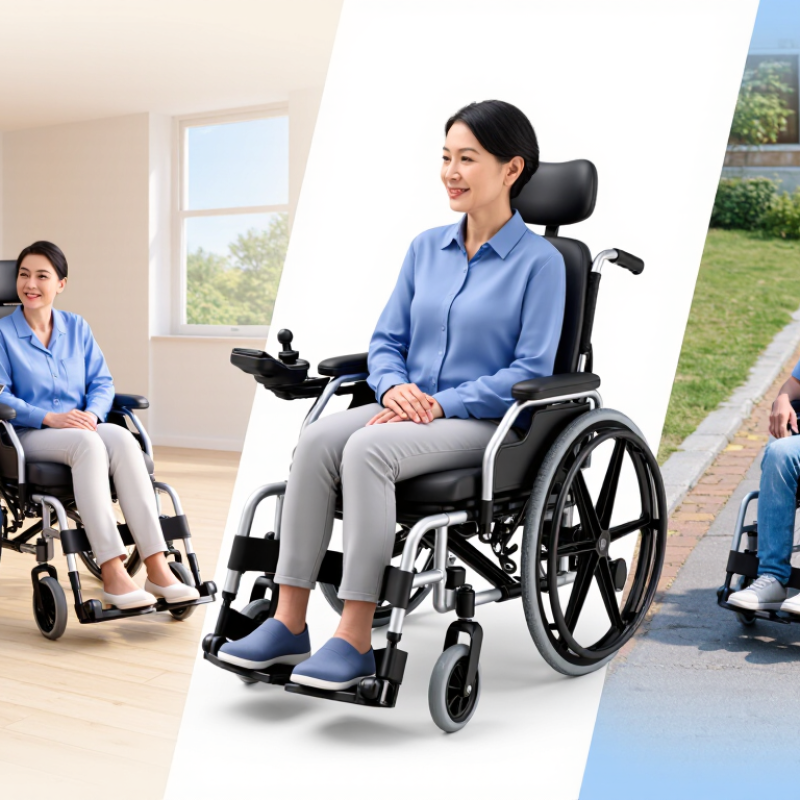
A customized mobility wheelchair is a mobility device configured around one person’s body, abilities, environment, and daily routines. It may include tailored seat width, back support, cushion firmness, footrest length, and drive controls. Fit matters. A wheelchair should support stable posture without creating pressure points or limiting breathing.
The World Health Organization and UNICEF reported in Global Report on Assistive Technology (2022) that more than 2.5 billion people need assistive products worldwide. This figure could exceed 3.5 billion by 2050. These numbers are sobering. They also show why standard equipment cannot meet every user’s needs. A seating specialist may assess pelvic alignment, muscle tone, skin sensitivity, transfer ability, and home access before recommending adjustments. Pressure mapping can reveal uneven loading that users may not feel immediately.
Customization can improve comfort, propulsion efficiency, and participation at work or school. It can also reduce avoidable strain during repeated daily movement. However, customization is not magic. A poorly measured chair remains poorly fitted, even with advanced components. Users should revisit the setup after weight changes, pain, growth, or changing routines. I have found that small details, such as a few centimeters of footrest adjustment, can affect confidence on ramps and uneven paths. That detail matters. The best configuration may also require compromise between indoor maneuverability, outdoor stability, transport weight, and maintenance.
Which Users Benefit Most from a Customized Mobility Wheelchair?
People who spend many hours in a wheelchair often benefit most from a customized mobility wheelchair. This includes users with spinal cord injuries, cerebral palsy, muscular dystrophy, multiple sclerosis, or significant postural asymmetry. Older adults with pressure-injury risks may also need individualized support. The World Health Organization estimates that more than 2.5 billion people need assistive products worldwide, while nearly one billion lack access to them, according to the Global Report on Assistive Technology (WHO and UNICEF, 2022).
Customization can improve seating stability, pressure distribution, propulsion efficiency, and daily safety. A specialist may adjust seat width, back angle, cushion density, foot supports, and rear-wheel position. These details matter during real routines, such as reaching a kitchen counter or transferring beside a bed. Users with changing strength or progressive conditions may benefit from adjustable components. A fixed solution may become unsuitable quickly.
No assessment is flawless. Body measurements can change with fatigue, swelling, or weight variation. Therefore, an experienced rehabilitation team should observe the user moving, turning, and transferring before recommending equipment. The WHO Guidelines on the Provision of Manual Wheelchairs in Less-Resourced Settings emphasize assessment, fitting, training, and follow-up. That last step is often underestimated. A wheelchair that feels comfortable for ten minutes may cause pain after six hours. Caregivers should also receive practical training, especially when users have limited hand function or balance.
Why Choose a Customized Mobility Wheelchair? - Which Users Benefit Most from a Customized Mobility Wheelchair?
| User Profile | Typical Mobility Need | Useful Customization | Practical Benefit | Potential Benefit Level |
|---|---|---|---|---|
| People with spinal cord injury | Limited leg function, reduced trunk stability, or high risk of pressure injury | Pressure-relieving cushion, adjustable back support, lateral supports, tilt-in-space, and suitable seat dimensions | Improves postural support, pressure management, comfort, and independent daily mobility | Very High |
| People with cerebral palsy | Involuntary movement, muscle imbalance, spasticity, or difficulty maintaining alignment | Contoured seating, head support, pelvic positioning, trunk supports, and adjustable foot supports | Supports alignment, functional reach, safe sitting, and participation in school or community activities | Very High |
| People with multiple sclerosis | Variable strength, fatigue, heat sensitivity, and changing mobility capacity | Lightweight configuration, adjustable power functions, supportive seating, and pressure management | Conserves energy, accommodates changing needs, and supports longer periods of safe mobility | High |
| Older adults with complex needs | Reduced balance, limited endurance, joint stiffness, or difficulty transferring | Correct seat height, transfer-friendly armrests, pressure-relieving cushion, brakes, and postural support | Makes transfers safer, improves comfort, and helps reduce caregiver strain | High |
| People with muscular dystrophy or neuromuscular conditions | Progressive weakness, reduced endurance, and difficulty maintaining an upright posture | Power seating, tilt and recline, head support, trunk positioning, and adaptable controls | Provides support as functional ability changes and may extend independent mobility | Very High |
| People recovering from injury or surgery | Temporary weight-bearing restrictions, pain, reduced balance, or limited range of motion | Adjustable footrests, removable supports, suitable seat width, cushioning, and easy-to-use brakes | Improves safety and comfort during rehabilitation while allowing adjustments as recovery progresses | Moderate to High |
| Active wheelchair users | Frequent community travel, sports participation, vehicle transport, or independent transfers | Lightweight frame, optimized seat position, efficient wheel placement, compact dimensions, and activity-specific accessories | Improves maneuverability, propulsion efficiency, portability, and participation in daily activities | Very High |
| Children and adolescents with changing body dimensions | Growth-related changes in posture, seat fit, leg length, and functional ability | Adjustable seat depth and width, modular supports, growth-friendly footrests, and adaptable controls | Maintains fit over time, supports development, and can reduce the need for frequent replacement | Very High |
How Are Customized Wheelchairs Designed for Individual Needs?
Customized mobility wheelchairs begin with the person, not a catalogue frame. A trained seating professional reviews posture, muscle tone, skin condition, transfer ability, and daily routes. They measure hip width, thigh length, seat-to-floor height, and trunk stability. Fit is personal. A two-centimeter error can affect pelvic alignment or push-rim access. The 2022 WHO and UNICEF Global Report on Assistive Technology estimates that 2.5 billion people need assistive products worldwide. That figure may exceed 3.5 billion by 2050. These numbers show why standardized seating cannot serve every body.
Design then becomes a practical conversation. A wheelchair user may need a pressure-relieving cushion, lateral supports, adjustable footplates, or a lighter rear wheel position. Someone navigating narrow doorways needs a measured turning radius, not a vague promise of mobility. Clinicians often observe transfers and propulsion, then test the chair indoors and outdoors. They check shoulder reach, braking control, vibration, and fatigue. Relevant testing should align with the ISO 7176 wheelchair safety series. Small details matter. A clinical trial remains more reliable than a paper specification.
Customization also includes growth, changing strength, transport, and caregiver handling. Adjustable components can extend useful life, but extra hardware may increase weight and maintenance. That trade-off deserves honest discussion. The WHO-UNICEF report also notes major global gaps in access, affordability, and trained support. A technically excellent chair can still fail if repairs are unavailable. Designers should record measurements, user feedback, and reassessment dates. No design is permanent. A first fitting may feel right, yet reveal pressure or fatigue after several hours. Professional follow-up can improve the next adjustment.
What Features Can Be Tailored for Comfort and Mobility?
Why Choose a Customized Mobility Wheelchair?
A customized mobility wheelchair can match the user’s body, routine, and movement needs more closely than a standard model. Seat width and depth affect posture, stability, and daily comfort. A trained clinician or seating specialist should measure these areas carefully. Small errors can cause pressure near the hips or knees.
Cushion selection is equally important. Memory foam may feel soft, while pressure-redistributing materials can support longer sitting periods. Backrest height, lateral supports, and head positioning can also be adjusted. Some users need tilt-in-space or reclining functions to change pressure and rest safely. These features should be fitted to the person, not chosen only for appearance.
Control placement can improve independence. A joystick may need positioning near the hand, while alternative controls can help users with limited strength or movement. Adjustable footrests support leg alignment and reduce strain during transfers. Wheel size, suspension, and frame width also influence turning, indoor access, and outdoor stability.
Real use reveals overlooked details. A cushion that feels comfortable indoors may become unsuitable during long trips. One adjustment can solve a problem while creating another. Regular reviews matter because posture, strength, and daily habits can change.
The best setup is practical, measured, and open to revision. Perfect fit is rarely achieved immediately.
How to Choose and Maintain the Right Customized Wheelchair?
Choosing a customized mobility wheelchair starts with daily reality, not a catalogue image. The World Health Organization estimates that over 2.5 billion people need assistive products, with demand reaching 3.5 billion by 2050. A proper assessment should examine posture, transfers, home layout, work surfaces, outdoor terrain, and propulsion strength. Seat width and depth matter. So does cushion pressure distribution. An occupational therapist or qualified wheelchair specialist can measure these details and document the user’s goals.
A first fitting may need correction. Bodies change, and a chair that feels comfortable indoors may perform poorly on uneven pavements. Ask about adjustable back support, footrest length, wheel position, and pressure-relieving functions. WHO reports that roughly 80 million people may need wheelchairs, while access remains limited in many regions. This makes reliable fitting especially important. Comfort is not a luxury.
Maintenance should become a small routine. Check tire pressure, wheel locks, casters, bolts, and cushion condition each week. Clean moving joints and remove hair from caster axles. For powered models, inspect charging connections and follow the battery schedule in the user manual. Keep a repair record. It reveals repeated problems. Do not ignore a slight pull, new squeak, or skin redness after sitting. These signs can indicate alignment, pressure, or transfer issues. A professional review is wise after major weight changes, surgery, or reduced hand strength. The perfect setup is rarely permanent.
Why Choose a Customized Mobility Wheelchair?
A customized wheelchair can improve posture, comfort, propulsion, and daily safety when its seat dimensions and support components match the user. Regular maintenance helps preserve fit and performance.
The intervals shown are practical general recommendations: perform safety checks daily, inspect moving parts weekly, review fit and seating components monthly, and arrange a professional service inspection about every six months. Always follow the wheelchair manufacturer’s instructions and a qualified clinician’s advice.
FAQS
It is fitted around one person’s body, abilities, surroundings, and daily routines. Seat width, back support, cushion firmness, footrests, and controls can be adjusted. Fit matters. The chair should support posture without causing pressure or breathing difficulty.
People using wheelchairs for many hours may benefit greatly. This includes users with limited strength, changing muscle tone, postural asymmetry, or pressure-injury risks. Older adults may also need individualized support. Not everyone needs the same level of customization.
Specialists can adjust seat width, seat depth, back angle, cushion density, and footrest length. They may also change head supports, lateral supports, wheel position, suspension, and frame width. Control placement can move closer to the user’s stronger hand. Small changes matter.
A suitable cushion can distribute pressure more evenly during long sitting periods. Proper back support may reduce slouching and shoulder strain. Correct footrest length can improve leg alignment and transfer safety. A few centimeters may change confidence on a ramp.
Yes, when the configuration matches the user’s strength and surroundings. A well-positioned control may make turning easier. A suitable rear-wheel position can improve propulsion efficiency. Indoor and outdoor needs may conflict. Compromise is normal.
A trained specialist may assess posture, pelvic alignment, skin sensitivity, muscle tone, and transfer ability. The user should be observed turning, reaching, and moving between surfaces. Pressure mapping can reveal uneven loading. Measurements are useful, but they are not perfect.
Yes. A comfortable ten-minute trial may not predict six hours of use. Reviews are important after weight changes, pain, swelling, growth, or routine changes. A cushion may work indoors but fail during a long trip. One adjustment can create another problem.
Not automatically. Customization cannot correct poor measurements or unsuitable equipment. Advanced features may add weight, cost, or maintenance demands. A narrower frame may turn well indoors but feel less stable outdoors. The best setup is practical and revisable. Perfect fit rarely arrives immediately.
Conclusion
A Customized Mobility Wheelchair is designed to match an individual’s body, lifestyle, and mobility goals rather than relying on a standard configuration. It can benefit people with long-term disabilities, changing physical conditions, limited strength, posture concerns, or active daily routines. By assessing factors such as body measurements, sitting balance, movement ability, home layout, and transportation needs, the wheelchair can be planned to provide better support, safety, and independence.
Many elements can be tailored, including seat width and depth, backrest angle, cushioning, footrests, armrests, wheel position, control systems, and folding or transport options. The right choice should balance comfort, maneuverability, durability, and ease of use while allowing room for future adjustments. Regular maintenance, including checking tires, brakes, batteries, cushions, and moving parts, helps preserve performance and safety. With professional fitting and routine care, a customized wheelchair can offer reliable support and improve everyday mobility.

Blog Tags: